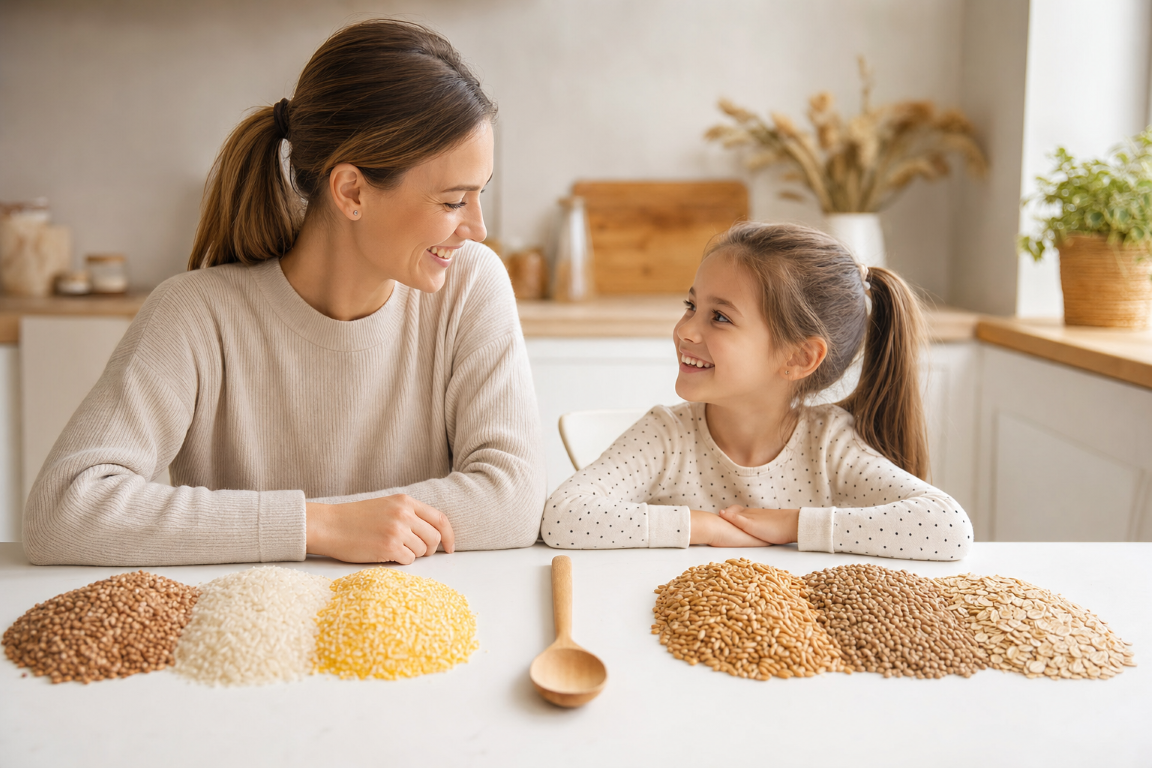
In short: Healthy children do not need to avoid gluten. ESPGHAN recommends the introduction of gluten-containing cereals between 4 and 12 months - with continued breastfeeding, this can reduce the risk of celiac disease. A gluten-free diet without a confirmed diagnosis has no evidence-based benefit and can be harmful.
What is gluten and why are people afraid of it?
Gluten is a protein complex found in wheat, rye, barley, and (to a lesser extent) ordinary oats. In recent years, "gluten-free" products have become a fashionable trend, which has given rise to the belief among many parents that gluten is harmful to children. In fact, this is not true - for the vast majority of children, gluten is absolutely harmless.
The exception is celiac disease: an autoimmune disease in which the consumption of gluten causes inflammation of the mucous membrane of the small intestine and malabsorption of nutrients. The prevalence of celiac disease in the world is about 1% of the population. The diagnosis is confirmed by serological tests and intestinal biopsy – not by symptoms from the Internet.
When to introduce gluten in complementary foods
ESPGHAN in its 2017 position statement recommends introducing gluten between 4 and 12 months. Previous data indicated a "golden window" of 4-7 months, but more recent studies have not confirmed that the exact period in this range is critical. The key conclusion: there is no need to deliberately postpone gluten "after a year".
Parallel breastfeeding with the first introduction of gluten is desirable. A number of studies show that it reduces the risk of developing celiac disease in genetically predisposed children, although the evidence is mixed. Read more about combining breastfeeding and complementary foods in a separate article. The introduction of gluten organically fits into the expansion of the diet - read about this in the article "Complementary foods at 6 months".
Gluten-free and gluten-containing cereals
Gluten-free cereals (with which complementary foods traditionally begin): buckwheat, rice, corn, millet, tapioca.
Gluten-containing cereals (introduced after acquaintance with gluten-free cereals or in parallel with them): wheat, rye, barley, semolina, oats (if not certified as "gluten-free", may be contaminated with wheat during production).
About the general procedure for introducing cereals - in the article "Where to start complementary foods: first products by month".
Symptoms of celiac disease in young children
If a few weeks after the start of gluten-containing products, the child has:
- Chronic diarrhea, greasy, foul-smelling stools.
- Bloating, refusal to eat.
- Delayed weight gain or weight loss.
- Irritability, apathy.
"This is a reason to consult a pediatrician and gastroenterologist. Diagnosis of celiac disease includes a blood test for antibodies (anti-tTG IgA) and, if necessary, a biopsy of the small intestine. It is not recommended to transfer the child to a gluten-free diet before the examination: this distorts the test results. If you are concerned about your child's overall development , discuss it with your pediatrician.
Gluten-free diet without diagnosis: why and is it worth it?
Parents sometimes switch their children to a gluten-free diet "just in case" or because of online recommendations. This is not only pointless, but also potentially harmful: gluten-free products are often poorer in fiber, B vitamins and iron. Without medical indications, such a diet has no proven benefit.
When to see a doctor
- After the introduction of gluten-containing products, the child stopped gaining weight, chronic diarrhea or constipation appeared.
- The abdomen has become noticeably swollen, the baby refuses to eat.
- The child refuses complementary foods with chronic discomfort.
- Close relatives have been diagnosed with celiac disease.
- You have noticed a delay in the physical development of the child.
Frequently Asked Questions
If a mother is intolerant to gluten, should the child avoid it?
No, unless the child himself is diagnosed with celiac disease or gluten sensitivity. A hereditary predisposition increases the risk, but does not mean a diagnosis. Monitor, read the article on safe allergen administration , and discuss screening with your pediatrician.
How to distinguish celiac disease from a normal digestive reaction to a new food?
The usual reaction to a new product (gas, change in stool) passes in 3-5 days. Symptoms of celiac disease increase gradually and persist as long as the child consumes gluten. Only a pediatrician can answer this question accurately after tests.
Conclusion
Gluten is not the enemy of a healthy child. It should be introduced into complementary foods within the age norms, without special postponement. With a hereditary risk of celiac disease, more careful monitoring and consultation with a pediatrician. A gluten-free diet without a confirmed diagnosis is not recommended. General rules for the safe introduction of any new products are in the article on meat and in the main guide to the first products.
Bibliography
- ESPGHAN Committee on Nutrition. Complementary Feeding: A Position Paper. J Pediatr Gastroenterol Nutr. 2017; 64(1):119–132.
- Szajewska H, et al. Gluten introduction and the risk of coeliac disease: a position paper by the European Society for Paediatric Gastroenterology, Hepatology, and Nutrition. J Pediatr Gastroenterol Nutr. 2016; 62(3):507–513.
- Lionetti E, et al. Introduction of gluten, HLA status, and the risk of celiac disease in children. N Engl J Med. 2014; 371(14):1295–1303.
- Vriezinga SL, et al. Randomized feeding intervention in infants at high risk for celiac disease. N Engl J Med. 2014; 371(14):1304–1315.
- Husby S, et al. European Society Paediatric Gastroenterology, Hepatology and Nutrition Guidelines for Diagnosing Coeliac Disease 2020. J Pediatr Gastroenterol Nutr. 2020; 70(1):141–156.
This material is for informational purposes only and does not constitute medical advice and is not a substitute for medical advice. If you suspect celiac disease or a reaction to gluten, consult your pediatrician or gastroenterologist.