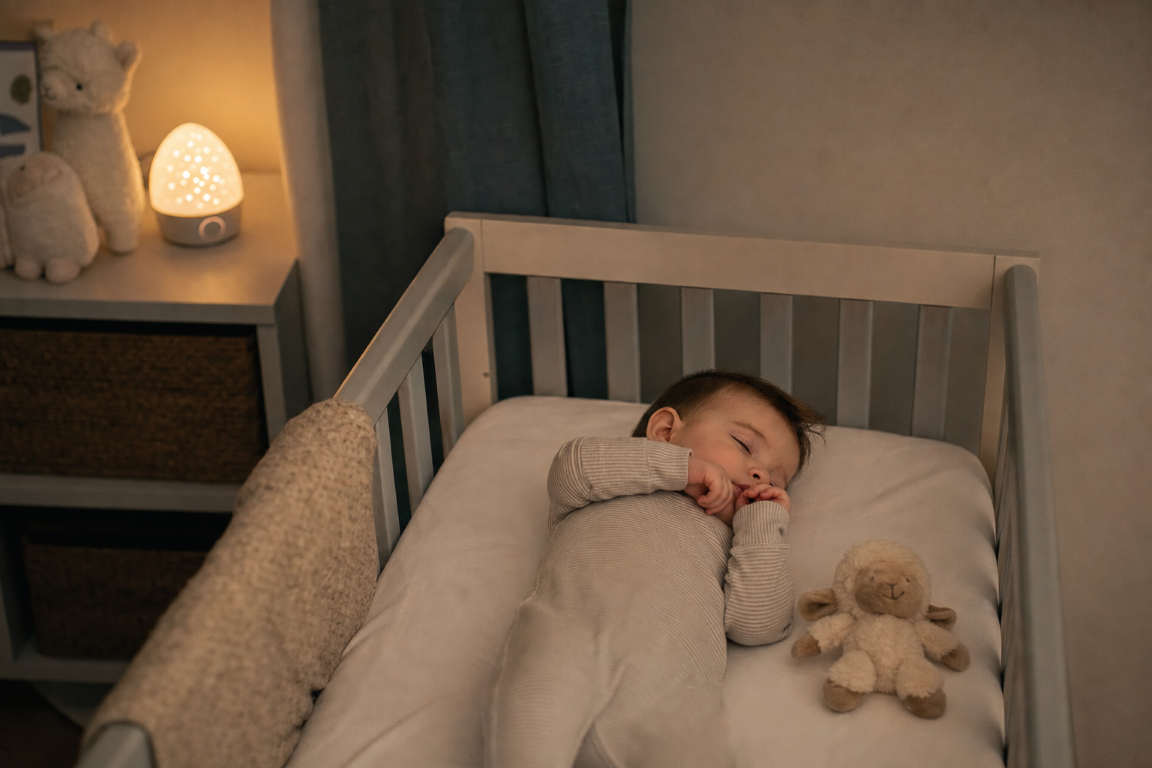
In short: A newborn sleeps 14-17 hours a day, a child of 6-12 months - about 12-15 hours, a baby of 1-2 years old - 11-14 hours. The norms are broad: the main guideline is the well-being and mood of the child, and not the exact number.
Why is it important to know the norms of sleep?
Sleep is not a luxury, but the basis of a child's health. During sleep, growth hormone is produced, neural connections are formed, and the immune system is strengthened. Chronic sleep deprivation in children is associated with behavior problems, attention difficulties, and a higher risk of obesity in preschool age. Understanding the normative range helps parents distinguish between a real problem and a temporary difficulty.
An important caveat: norms are ranges, not strict numbers. Children differ from each other in the same way as adults. A child who sleeps 30-40 minutes less than average, but at the same time is cheerful, active and developing well, sleeps enough. If the baby fits into the range, but looks constantly tired, it is worth understanding the quality of sleep.
Sleep norms from birth to 3 months
Newborns sleep a lot and chaotically: sleep is distributed evenly over the day without a clear division into day and night. A child's circadian rhythms are just beginning to form – this process will be completed closer to 3-4 months.
- Daily Value: 14–17 hours (AAP allows 11–19 hours as the normal range)
- Night sleep: 8-9 hours (with awakenings for feeding every 2-3 hours)
- Daytime nap: 4-5 periods of 30-60 minutes
- Wakefulness between dreams: 45–90 minutes
At this age, the concept of "regime" is very conditional. The task of parents is to respond to the signals of the child's fatigue: yawning, rubbing the eyes, looking away, "whimpering" for no apparent reason. You can read more about how to establish a sleep schedule in a newborn separately.
Sleep norms from 3 to 6 months
By 3 months, most children begin to form a difference between day and night. Night sleep gradually lengthens - some children sleep for 4-6 hours as early as 3-4 months. At the same time, sleep regression begins at 4 months - one of the most difficult for parents.
- Daily rate: 12-16 hours
- Night sleep: 9-10 hours (1-3 awakenings are possible)
- Daytime sleep: 3-4 periods
- Wake time: 1.5-2 hours
Sleep norms from 6 to 12 months
In the second half of life, sleep becomes more predictable. Most children switch to 2 daytime naps. Night feedings are gradually reduced, although many babies continue to wake up 1-2 times. More pronounced associations with sleep are formed, and it is at this age that difficulties with bedtime often arise.
- Daily rate: 12-15 hours
- Night sleep: 10–11 hours
- Daytime sleep: 2 times (in the morning and at lunch), a total of 2-3 hours
- Waking time: 2–3.5 hours
Signs of good sleep: the child falls asleep easily, wakes up in a good mood, is active and curious during the waking period, is not irritable for no reason.
Sleep norms from 1 year to 18 months
After the first birthday, many children go from two daytime naps to one. This is one of the most ambiguous transitions: the child seems to "do not want" a single daytime nap, or two, and this creates difficulties. The transition usually occurs between 12 and 18 months. Read more about the rules of daytime sleep and when to cancel it in a separate article.
- Daily intake: 11-14 hours
- Night sleep: 10–11 hours
- Daytime sleep: 1-2 times, a total of 1.5-3 hours
- Waking time: 3-5 hours
Around 12-15 months, many children have a crisis in the first year, which can also temporarily disrupt sleep. It is important not to confuse behavioral changes with sleep regression.
Sleep norms from 18 months to 2 years
- Daily intake: 11-14 hours
- Night sleep: 10–11 hours
- Daytime nap: 1 time, 1.5-2.5 hours
- Wake time: 5–6 hours
At this age, the first fears of sleep may appear: the child is afraid of the dark, "grandmothers", does not want to be alone. This is a normal part of the development of imagination.
Sleep norms from 2 to 3 years
- Daily intake: 11-14 hours
- Night sleep: 10–11 hours
- Daytime nap: 1 time or refusal to nap (in some children after 2.5-3 years)
- Waking time: 5–7 hours
Some children stop sleeping during the day by the age of 2.5-3 years. If the child sleeps enough at night and does not look overtired during the day, this is normal. If he is capricious, rubs his eyes and becomes uncontrollable in the evening, most likely, a daytime nap is still needed.
General table of sleep norms
- 0-3 months: 14-17 hours a day, 4-5 daytime naps
- 3-6 months: 12-16 hours, 3-4 daytime naps
- 6-12 months: 12-15 hours, 2 daytime naps
- 12-18 months: 11-14 hours, 1-2 daytime naps
- 18 months – 2 years: 11–14 hours, 1 daytime nap
- 2-3 years: 11-14 hours, 1 nap or no nap
Source of norms: these tables are based on the recommendations of the American Academy of Pediatrics (AAP, 2016) and the WHO recommendations for sleep in children under 5 years of age (2019).
Signs of insufficient sleep
A child may be sleep deprived if there are several of the following signs:
- Falls asleep in the car or stroller at the slightest movement
- Irritable, often cries for no apparent reason
- Rubs his eyes and yawns during the day during the waking period
- Wakes up much earlier than usual and looks tired
- Hyperactive in the evening ("second wind" - second wind due to fatigue)
When to see a doctor
- The child systematically sleeps much less than the lower limit of normal and at the same time looks tired
- A night's sleep is accompanied by noisy breathing, snoring, or pauses – this may be a sign of sleep apnea
- The child sleeps much more than the upper limit of the norm and has difficulty waking up
- Sleep disorders are combined with developmental delay, weight loss or other alarming symptoms
Frequently Asked Questions
My child sleeps less than normal, but looks normal. Is this a problem?
Norms are ranges, not exact numbers. If the baby is cheerful, active, eats well and develops, most likely, he is just at the lower limit of normal or slightly lower. Focus on the child's well-being, not just numbers.
Should you count day and night sleep together?
Yes, the norms of daily sleep include both night and day sleep in total.
When does the child no longer need a daytime nap?
Most children refuse to take a nap between the ages of 2.5 and 4. It is very individual. Some children in kindergarten continue to sleep during the day until they are 5-6 years old. Read more in the article about daytime naps.
Conclusion
Sleep norms are a guideline, not a strict standard. A child sleeps enough if he is awake, develops well and falls asleep without prolonged resistance. If you are concerned about your baby's sleep, look at his waking behavior: it will tell you more than any table.
Bibliography
- Paruthi S., et al. "Recommended Amount of Sleep for Pediatric Populations." Journal of Clinical Sleep Medicine, 2016; 12(6): 785–786. (AAP)
- Hirshkowitz M., et al. "National Sleep Foundation's Sleep Time Duration Recommendations." Sleep Health, 2015; 1(1): 40–43.
- WHO. "Guidelines on Physical Activity, Sedentary Behaviour and Sleep for Children under 5 Years of Age." 2019.
- Galland B.C., et al. "Normal Sleep Patterns in Infants and Children." Sleep Medicine Reviews, 2012.
- Mindell J.A., Owens J.A. "A Clinical Guide to Pediatric Sleep." Lippincott Williams & Wilkins, 2015.
This material is for informational purposes only and does not constitute medical advice and is not a substitute for medical advice. If a child's sleep is accompanied by alarming symptoms, a pronounced deterioration in health, problems with breathing, feeding or weight gain, it is necessary to consult a qualified medical specialist as soon as possible, and not rely only on information from the Internet.