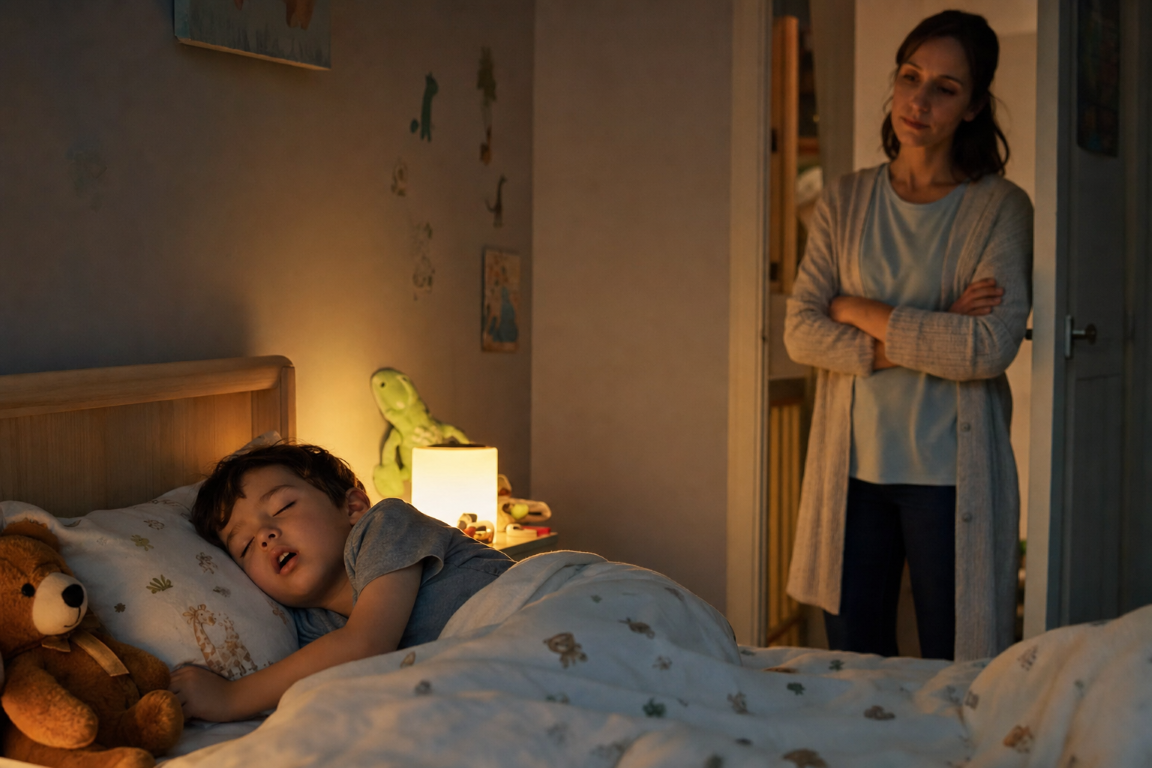
In short: Sleep apnea in children is pauses in breathing during sleep lasting more than 10 seconds. The main symptoms are loud snoring, noisy breathing, pauses in breathing, restless sleep, daytime sleepiness. If apnea is suspected, a consultation with a pediatrician is necessary.
What is sleep apnea
Apnea (from the Greek "no wind") is a temporary cessation of breathing during sleep. Short-term pauses (2-3 seconds) are the physiological norm; Pauses lasting 10 seconds or more or frequent short pauses (more than 5 times per hour) are considered pathological.
Childhood sleep apnea is different from adult sleep apnea. In children, the most common obstructive form (OSAS - obstructive sleep apnea syndrome): during sleep, the soft tissues of the throat (enlarged tonsils or adenoids) temporarily block the airways. This reduces blood oxygen saturation and disrupts sleep architecture.
How common is apnea in children
According to studies, OSAS occurs in 1-5% of children. The peak is preschool age (2-8 years), when the tonsils and adenoids are growing most actively. Boys are affected a little more often than girls. Apnea can also occur in newborns and premature babies (central apnea – associated with immaturity of the nervous system).
Signs of sleep apnea in children
Nocturnal symptoms:
- Loud, constant snoring (not single snoring)
- Noisy breathing, sniffling, wheezing
- Visible pauses in breathing (the child "does not breathe" for a few seconds)
- Restless sleep: frequent awakenings, change of position, sweating
- Breathing through the mouth in a dream
- Nocturnal enuresis in children over 3-4 years of age (with well-established control)
Daytime symptoms:
- Daytime sleepiness, difficulty waking up
- Hyperactivity, irritability, difficulty concentrating – in children, sleep deprivation is often manifested not by lethargy, but by excitement
- Behavioral and learning problems
- Constant breathing through the mouth and the "adenoid face"
Important: Not all children with apnea snore, and not everyone who snores has apnea. If you are worried about your child's breathing during sleep, record it on video: this is invaluable information for the doctor.
Causes of apnea in children
- Enlarged adenoids and tonsils are the most common cause in children 2-8 years old
- Obesity – fatty tissue in the neck narrows the airways
- Anomalies of the structure of the skull and face (Down syndrome, Pierre Robin syndrome and others)
- Neuromuscular diseases that reduce the tone of the muscles of the respiratory tract
- Prematurity – central apnea due to immaturity of the respiratory center
Diagnosis
The standard for diagnosing apnea is polysomnography (PSG): a study of sleep in a laboratory setting that simultaneously measures breathing, blood oxygen saturation, brain activity, and other indicators. In Russia, PSG is carried out in sleep centers and some multidisciplinary hospitals.
The first step is to consult a pediatrician. He will assess the clinical picture and refer you to an otorhinolaryngologist (ENT), somnologist or pulmonologist. Important: do not try to "diagnose" apnea yourself from video - this is a clinical diagnosis.
Treatment of apnea in children
Treatment depends on the cause:
- Removal of adenoids and/or tonsils (adenotonsillectomy): effective in 70% to 90% of cases in children with enlarged OSAS
- CPAP therapy (continuous positive airway pressure): used for severe apnea or when surgery is contraindicated
- Weight correction: for apnea due to obesity
- Orthodontic treatment: for malocclusion
- Observation: for mild apnea in preschoolers – the doctor may recommend observation without active treatment
Sleep Apnea and Sleep Disorders: The Connection
Sleep apnea leads to sleep fragmentation: the child wakes up frequently (not always completely), which disrupts his architecture. Chronic sleep deprivation due to sleep apnea can mimic sleep regression, frequent nighttime awakenings , and other behavioral sleep problems. It is important not to confuse these conditions: behavioral sleep problems do not require medical treatment, apnea does.
When to see a doctor
- You observe pauses in the child's breathing in sleep - even once
- The child snores loudly and constantly (not isolated sounds)
- Noisy breathing through the mouth at night
- The child, despite sufficient night sleep, constantly looks tired, hyperactive, and has difficulty concentrating
- A child with Down syndrome or another systemic disease has a routine apnea examination
- A premature baby in the first months of life has any pauses in breathing
Frequently Asked Questions
Is sleep apnea dangerous for a child?
Untreated severe apnea can affect cardiovascular health, cognitive development, and behavior. Timely treatment in the vast majority of cases completely eliminates the problem.
Is snoring in a child always apnea?
No. Many children periodically snore when they have a runny nose or in a certain position. Apnea is diagnosed not by snoring, but by a combination of symptoms and research data. If snoring is constant, loud and combined with other symptoms, consult a pediatrician.
Conclusion
Sleep apnea in children is a well-studied condition with clear causes and effective treatment. The main thing is to notice the symptoms in time and see a doctor, and not write it off as "just bad sleep". If something bothers you in your child's breathing, don't wait: shoot a video and show it to the pediatrician.
Bibliography
- Marcus C.L., et al. "Diagnosis and Management of Childhood Obstructive Sleep Apnea Syndrome." Pediatrics, 2012; 130(3): 576–584. (AAP)
- Lumeng J.C., Chervin R.D. "Epidemiology of Pediatric Obstructive Sleep Apnea." Proceedings of the American Thoracic Society, 2008; 5(2): 242–252.
- Roland P.S., et al. "Clinical Practice Guideline: Polysomnography for Sleep-Disordered Breathing Prior to Tonsillectomy in Children." Otolaryngology – Head and Neck Surgery, 2011.
- Kadmon G., et al. "Obstructive Sleep Apnea Syndrome in Children." Paediatric Respiratory Reviews, 2010.
- Clinical recommendations of the Russian Federation. Obstructive sleep apnea syndrome in children. Ministry of Health of the Russian Federation, 2021.
This material is for informational purposes only and does not constitute medical advice and is not a substitute for medical advice. If a child's sleep is accompanied by alarming symptoms, a pronounced deterioration in health, problems with breathing, feeding or weight gain, it is necessary to consult a qualified medical specialist as soon as possible, and not rely only on information from the Internet.