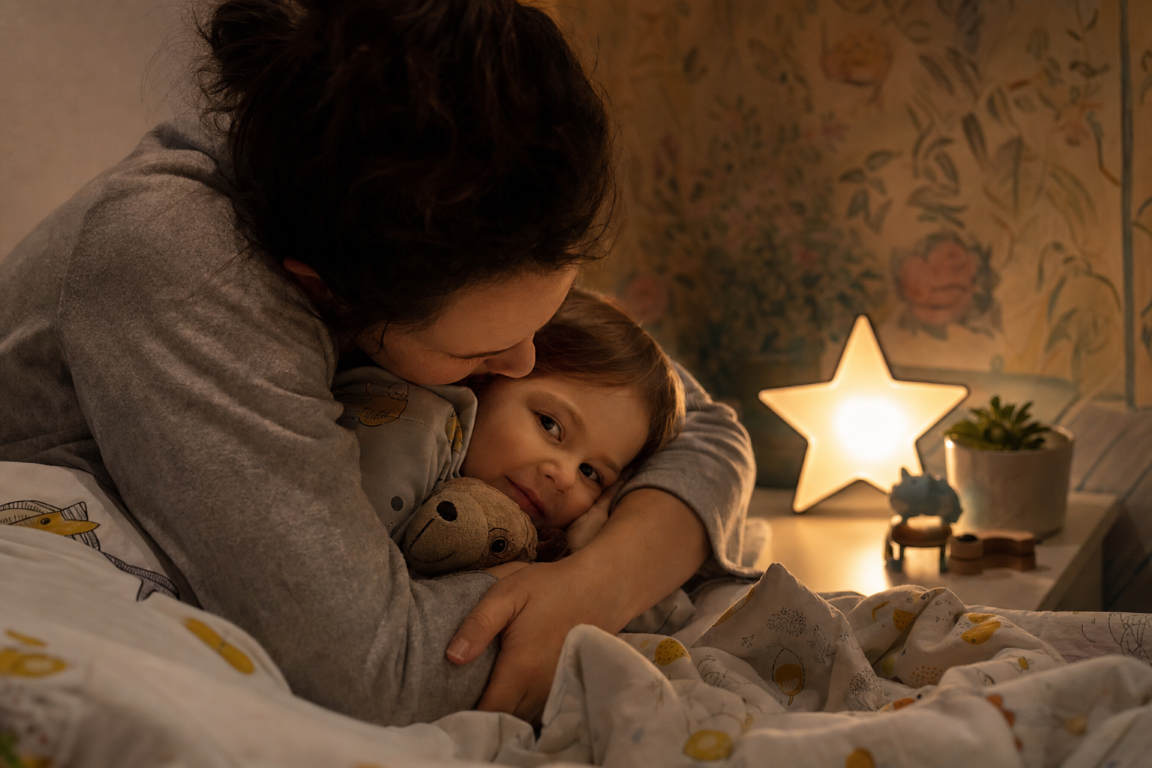
In short: Sleep fears are a normal stage of development for children from 1.5 to 6 years old. It is based on an active imagination and an immature understanding of reality. The main helpers are a predictable ritual, a calm reaction of parents and recognition of fears without ridicule.
Why are children afraid before bed?
Fears of sleep are not a whim or an attempt at manipulation. They are rooted in the normal development of imagination: from about 18 months to 5-6 years, children are not always able to clearly distinguish between the real and the imaginary. Darkness, shadows, unfamiliar sounds, characters from books or cartoons - all this can be perceived as a real threat.
Fears are especially intensified at moments of intensive development: during sleep regressions, during the crisis of 1 year, at 2-3 years (crisis "I myself"), before the first kindergarten. At this time, the child is faced with the realization of his own vulnerability – and this is frightening.
Age-related features of fears
- 1.5–2 years: separation anxiety, fear of the dark and unfamiliar places. The child does not yet understand permanence: "mom is gone" is perceived as "mom is gone".
- 2-3 years: fear of monsters, "grannies", shadows. Imagination is active, but critical thinking does not work yet.
- 3-5 years: fear of death, illness, "something terrible". The child begins to understand reality, and this is frightening.
- 5–6 years old: social fears, nightmares. Dreams become more complex and memorable.
Nightmares and Night Terrors: What's the Difference
These are two different phenomena:
- Nightmare: Occurs in the second half of the night (REM phase). The child wakes up, remembers the dream, and seeks consolation. Usually calms down easily with a parent.
- Night terror (terror): occurs in the first third of the night (deep sleep). The child screams, beats, seems to be in a panic - but does not wake up and does not remember anything in the morning. Do not try to wake up: this can intensify the episode. Just stay close and keep it safe.
Important: night terrors (horrors) at the age of 2-6 years are normal, they are not associated with psychological problems and go away on their own with age.
How to help your child cope with sleep fears
- Take your fears seriously. The phrase "it's all fiction, there's nothing" doesn't help – it's real for a child. Say: "I understand that you are afraid. You're safe, I'm here."
- Predictable ritual. A stable bedtime ritual reduces anxiety. The child knows what will happen next - and this calms down.
- A night light or a small light. The fear of the dark is physiological. A small night light or light in the hallway is quite acceptable.
- "Protective object". A favorite toy, a "magic" flashlight, a "monster spray" (water in a bottle) – children respond well to specific "tools" of protection.
- Say goodbye confidently. Long goodbyes to repeated returns increase anxiety. Say, "I'm coming, you're safe. See you in the morning" — and leave.
- Limit scary content. Scary books, cartoons, and games 1-2 hours before bedtime increase fears. Replace it with calm content.
What doesn't help (and can hurt)
- Ridiculing or devaluing fears ("don't be a coward")
- Playing along to a degree that increases fear (for example, "checking" under the bed every night, seriously discussing monsters)
- Staying with the baby until you fall asleep every night forms a new association with sleep and interferes with self-falling asleep
When to see a doctor
- The fears are so intense that the child refuses to sleep in his room for months and this grows
- Night terrors happen very often (several times a week) in a child over 6 years old
- Fears are combined with anxiety during the day, refusal from kindergarten, deterioration of behavior
- The child describes recurring nightmares with very specific content - this can be a reaction to stress or experiences
Frequently Asked Questions
Is it normal for a 2-year-old child to be afraid of the dark?
Yes, this is absolutely normal. Fear of the dark is one of the most common childhood fears. It is associated with an actively developing imagination and an immature understanding of reality. A night light is a completely reasonable and safe solution.
Is it possible to allow a child to come to bed with his parents after a bad dream?
It is okay to calm a frightened child in your bed once. If this becomes a daily habit that does not suit you, it is worth gradually teaching the child to stay in his room using gentle methods.
Conclusion
Sleep fears are a normal, albeit difficult, stage. Calm, consistent parental support is the best thing you can do. With age, most fears go away on their own: imagination becomes more controllable, and reality becomes less frightening.
Bibliography
- Muris P., et al. "The Etiology of Childhood Fears and Anxieties." Child Development, 2001.
- Mindell J.A., Owens J.A. "A Clinical Guide to Pediatric Sleep." 2015.
- Sheldon S.H., et al. "Principles and Practice of Pediatric Sleep Medicine." 2014.
- AAP. "Sleep Terrors and Nightmares." HealthyChildren.org, 2022.
This material is for informational purposes only and does not constitute medical advice and is not a substitute for medical advice. If a child's sleep is accompanied by alarming symptoms, a pronounced deterioration in health, problems with breathing, feeding or weight gain, it is necessary to consult a qualified medical specialist as soon as possible, and not rely only on information from the Internet.