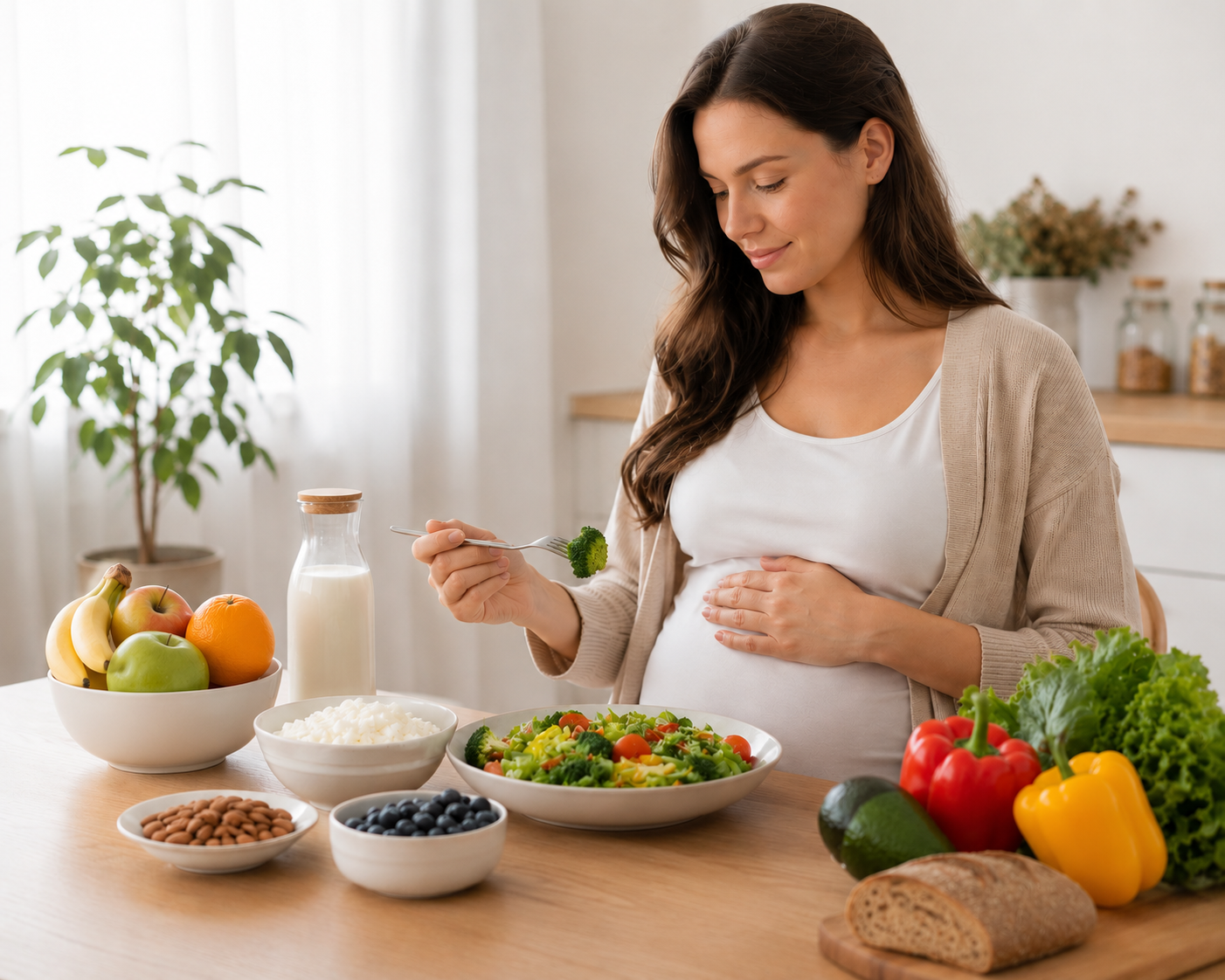
In short: Nutrition during pregnancy does not require "eating for two" - the need for calories grows gradually. In the first trimester, it almost does not change, in the second it is added about 340 kcal / day, in the third - about 450 kcal / day. Protein, folic acid, iron, calcium, omega-3 and iodine are important. Alcohol, raw meat and fish, unpasteurized dairy products are prohibited.
General principles of nutrition during pregnancy
Pregnancy is not a reason to switch to a special diet, but a reason to make eating more conscious. The basis of the diet is a variety of natural products: vegetables, fruits, whole grains, legumes, lean meat, fish, dairy products. Ultra-processed food, fast food, excess sugar and salt reduce the quality of the diet and can contribute to excess weight gain.
It is important to remember: weight gain during pregnancy is the norm. According to the recommendations of the IOM (Institute of Medicine), with a normal BMI before pregnancy, the recommended gain is 11.5-16 kg, with overweight - 7-11.5 kg, with obesity - 5-9 kg.
First trimester meals (1-13 weeks)
In the first trimester, the fetus is still very small, and the need for calories practically does not increase. The most important thing at this stage is the quality, not the quantity of food. Against the background of early toxicosis , many women find it difficult to eat normally: the main thing is not to starve and drink enough fluids.
Folic acid is the number one priority. It is necessary for the formation of the neural tube of the fetus, which closes by the 28th day after conception - often even before a woman learns about pregnancy. WHO recommends 400 mcg/day from the time of pregnancy planning and in the first 12 weeks. Sources: dark green leafy vegetables (spinach, broccoli), legumes, citrus fruits, fortified cereals.
Iodine is important for the development of the fetal thyroid gland. The norm for pregnant women is 220-250 mcg/day. Sources: seafood, sea fish, iodized salt, dairy products.
If toxicosis prevents you from eating normally, focus on foods that are well tolerated: crackers, rice, bananas, boiled vegetables. This is temporary, and the situation will return to normal by the end of the first trimester.
Second trimester meals (14-27 weeks)
The second trimester for most women is the most comfortable: toxicosis recedes, appetite returns. At this time, the need for calories increases by about 340 kcal / day - this is about a glass of kefir, a handful of nuts and an apple. You don't need to add a whole plate of pasta.
Protein. In the second and third trimesters, protein is especially important for the growth of fetal, placenta, and uterine tissues. The recommended intake is 71 g/day (for comparison: outside pregnancy - 46 g/day). Sources: poultry, fish, eggs, legumes, cottage cheese, cheese.
Iron. Blood volume during pregnancy increases by 40-50%, and the need for iron increases dramatically: from 18 mg/day before pregnancy to 27 mg/day. Iron deficiency is the most common anemia in pregnancy. Red meat (beef, veal), offal, legumes, dark green vegetables are your allies. Vitamin C aids in the absorption of iron from plant sources: eat vegetables with citrus fruits or bell peppers.
Calcium. It is necessary for the formation of bones and teeth of the fetus. The norm is 1000 mg / day. Milk, yogurt, cheese, fortified plant drinks, sesame, almonds, broccoli. If there is not enough calcium in the diet, the body takes it from the mother's bones.
Nutrition in the third trimester (28-40 weeks)
In the third trimester, the fetus gains the bulk of its body weight. The need for calories increases by another 450 kcal/day from the initial level. At the same time, the uterus is squeezing the stomach more and more, so many women are more comfortable eating often and in small portions - 5-6 times a day. It also helps with heartburn.
Omega-3 fatty acids (DHA and EPA). They are critically important for the development of the brain and vision of the fetus. The main sources are fatty sea fish (salmon, sardines, herring). WHO recommends 1–2 servings of fish per week. If there is little fish in the diet, the doctor may prescribe DHA supplements.
Fiber and water. Constipation is a common problem of the third trimester. Consume at least 25-30 g of fiber per day (vegetables, fruits, whole grains, legumes) and drink enough water: 8-10 glasses per day. Water also helps reduce swelling – despite the seeming contradiction.
What not to eat during pregnancy
Alcohol. There is no safe dose of alcohol during pregnancy. Alcohol crosses the placenta and can cause fetal alcohol syndrome, developmental delay, and other disorders.
Raw and underprocessed meat and fish (steaks with blood, sushi, carpaccio, raw oysters) – risk of salmonellosis, listeriosis, toxoplasmosis.
Unpasteurized dairy products (soft cheeses made from raw milk: Camembert, Brie, Roquefort) – risk of listeriosis.
Large predatory fish (shark, swordfish, tuna in large quantities, tile) - contains high concentrations of mercury, which is neurotoxic to the fetus.
Caffeine. The WHO and ACOG recommend limiting caffeine intake to 200–300 mg/day (approximately 1–2 cups of coffee). High caffeine intake is associated with the risk of miscarriage and low birth weight.
Raw eggs and dishes based on them (homemade mayonnaise, eggs "in a bag", tiramisu with raw eggs) are a risk of salmonellosis.
Weight gain during pregnancy: what is considered normal
Weight gain during pregnancy consists of the weight of the fetus itself (~3–3.5 kg), placenta (~0.7 kg), amniotic fluid (~0.9 kg), enlargement of the uterus (~1 kg), growth of the mammary glands (~0.5 kg), increase in blood volume (~1.5 kg), and maternal fat reserves (~2–4 kg).
Uniform weight gain is preferable to sharp weight. In the first trimester, the gain is minimal (0.5-2 kg), in the second and third - about 0.4-0.5 kg per week with a normal BMI before pregnancy.
When to see a doctor
Consult your doctor or dietitian if:
You lose weight in the second or third trimester (without toxicosis).
If you gain weight too quickly – more than 1 kg per week may indicate swelling or other disorders.
If you have diabetes, celiac disease, vegetarianism, or other dietary habits , you will need a personalized plan.
Tests showed a deficiency of iron, calcium or other nutrients – for more information about the tests, see the article Tests during pregnancy.
You lose weight in the second or third trimester (without toxicosis).
If you gain weight too quickly – more than 1 kg per week may indicate swelling or other disorders.
If you have diabetes, celiac disease, vegetarianism, or other dietary habits , you will need a personalized plan.
Tests showed a deficiency of iron, calcium or other nutrients – for more information about the tests, see the article Tests during pregnancy.
Frequently Asked Questions
Can I eat spicy food during pregnancy?
Spicy foods do not harm the fetus directly, but can increase heartburn and abdominal discomfort. If you tolerate spicy dishes well and they do not cause unpleasant symptoms, there is no strict prohibition.
Is it necessary to take prenatal vitamins if the diet is good?
Yes. Even with a varied diet, it is difficult to provide adequate levels of folic acid, iodine, iron, and vitamin D through food alone. Prenatal vitamins are an important addition, not a substitute for a complete diet. For more details, see the article What vitamins do pregnant women need.
Can I follow a vegetarian or vegan diet during pregnancy?
A vegetarian diet during pregnancy is possible, but requires careful planning. Protein, iron, calcium, vitamin B12, iodine, zinc, omega-3 and vitamin D require special attention. Be sure to discuss the meal plan with your doctor.
Conclusion
Nutrition during pregnancy is based on the principles of variety, moderation and safety. No strict diets, no "for two" - just a conscious choice of foods rich in protein, folic acid, iron, calcium and omega-3. Exclude alcohol, raw meat and fish, unpasteurized products. Prenatal vitamins are an important addition to the diet. And don't forget: nutrition is a topic in which your doctor is always ready to give personalized recommendations.
Bibliography
- WHO. Healthy diet during pregnancy. WHO, 2023. https://www.who.int/news-room/fact-sheets/detail/healthy-diet
- Institute of Medicine. Weight Gain During Pregnancy: Reexamining the Guidelines. National Academies Press, 2009. https://www.ncbi.nlm.nih.gov/books/NBK32813/
- ACOG Committee Opinion No. 762. Prepregnancy Counseling. Obstet Gynecol. 2019. https://www.acog.org/clinical/clinical-guidance/committee-opinion/articles/2019/01/prepregnancy-counseling
- Koletzko B, et al. Dietary fat intakes for pregnant and lactating women. Br J Nutr. 2007;98(5):873-877. https://pubmed.ncbi.nlm.nih.gov/17688705/
- NICE. Antenatal care. NICE Guideline NG201, 2021. https://www.nice.org.uk/guidance/ng201
- Ministry of Health of the Russian Federation. Clinical recommendations: Normal pregnancy. Ministry of Health of the Russian Federation, 2023. https://cr.minzdrav.gov.ru/
This material is for informational purposes only and does not constitute medical advice and is not a substitute for medical advice. If a child's sleep is accompanied by alarming symptoms, a pronounced deterioration in health, problems with breathing, feeding or weight gain, it is necessary to consult a qualified medical specialist as soon as possible, and not rely only on information from the Internet.