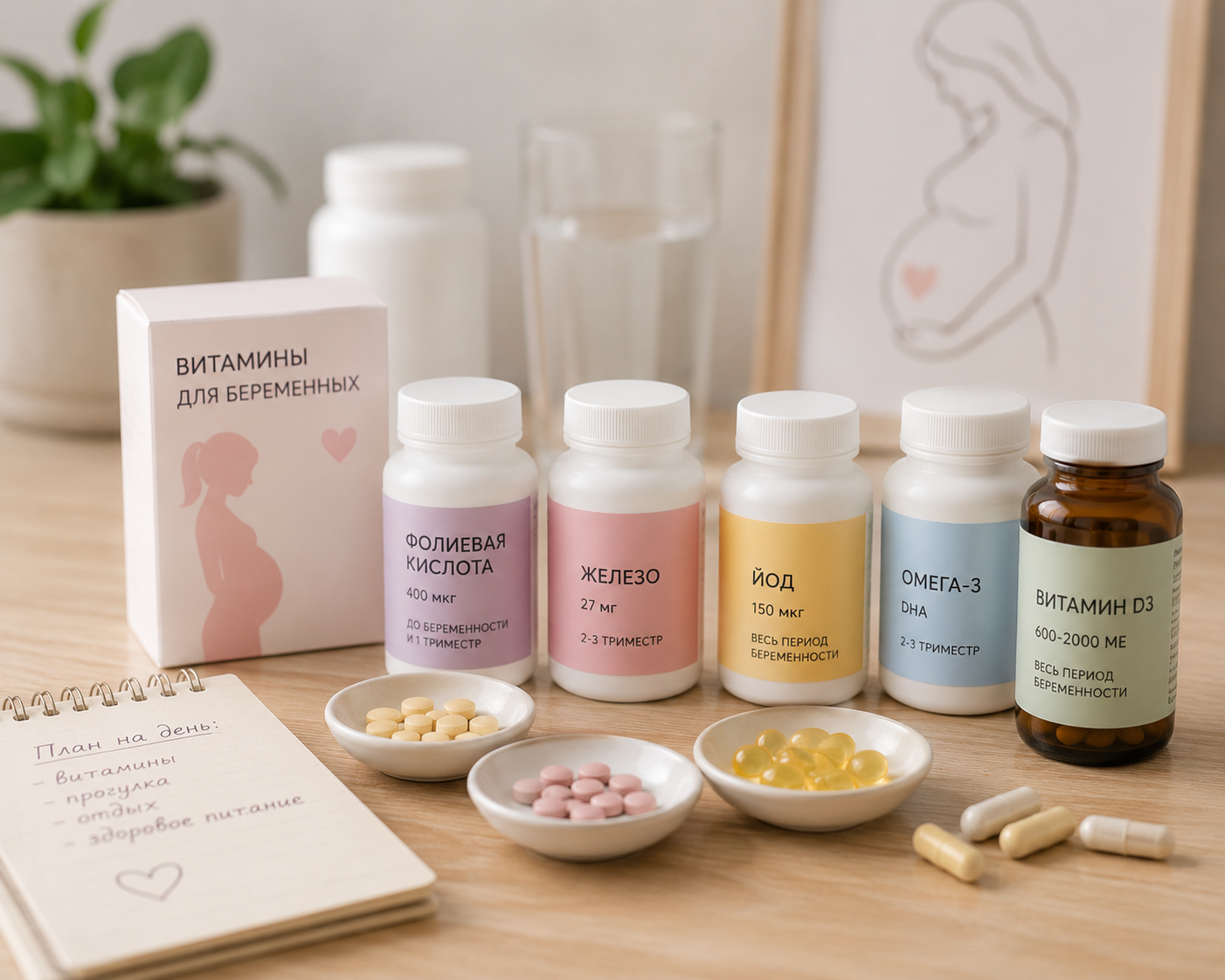
In short: During pregnancy, the need for folic acid, iron, iodine, calcium, vitamin D and omega-3 increases. A prenatal vitamin complex is an important supplement to nutrition, not a substitute for it. Doses and specific drugs are selected by the doctor based on tests and pregnancy characteristics.
Why pregnant women need additional vitamins
During pregnancy, the body works for two: nutrients are needed both to maintain the health of the mother and for the development of the fetus. The need for a number of nutrients is increasing so much that it is extremely difficult to cover it only through nutrition , even with an ideal diet. That is why prenatal vitamin complexes are recommended for almost all pregnant women.
At the same time, vitamins are a supplement to nutrition, not a substitute for it. Many nutrients are better absorbed from food than from pills, and a varied diet is still the basis.
Folic acid (vitamin B9)
Folic acid is the most important nutrient at the very beginning of pregnancy. It is necessary for the formation of the neural tube of the fetus, which later turns into the brain and spinal cord. The neural tube closes as early as the 28th day after conception, often even before a woman knows she is pregnant.
Folic acid deficiency leads to non-closure of the neural tube (spina bifida, anencephaly). WHO and ACOG recommend starting 1-3 months before planned conception and continuing until the end of the first trimester. The standard dose is 400-800 mcg/day. For women at increased risk (diabetes, anticonvulsants, previous pregnancies with neural tube defect) – 4000-5000 mcg/day as prescribed by a doctor.
Food sources: dark leafy vegetables (spinach, arugula), broccoli, Brussels sprouts, legumes, citrus fruits, avocados. However, folic acid is less absorbed from food than from supplements, so supplements are essential.
Iron
Blood volume during pregnancy increases by 40-50%, and the need for iron increases dramatically: from 18 mg/day to 27 mg/day. Iron deficiency is the most common anemia of pregnancy, which occurs in 15-25% of women in Russia.
Iron deficiency anemia during pregnancy is associated with the risk of premature birth, low birth weight, and postpartum hemorrhage. Symptoms of deficiency: pallor, weakness, shortness of breath, tachycardia, decreased concentration.
Sources of iron: red meat, by-products (liver), fish, legumes, dark green leafy vegetables, fortified cereals. Vitamin C improves the absorption of iron from plant sources. Coffee, tea and calcium impair iron absorption – do not wash down iron preparations with milk and do not drink coffee immediately after taking it. A blood test for ferritin and hemoglobin levels will help you understand whether supplements are needed – read more about pregnancy tests.
Iodine
Iodine is necessary for the normal functioning of the mother's thyroid gland and the development of the fetal thyroid gland. Its deficiency leads to thyroid disorders in the mother, and in the child - to mental retardation (cretinism in severe cases).
The recommended dose during pregnancy is 220–250 mcg/day (WHO). In Russia, many regions are iodine-deficient, so iodine-containing supplements are recommended for most pregnant women. Sources: seafood, sea fish, seaweed, iodized salt, dairy products.
Calcium
Calcium is necessary for the formation of fetal bones and teeth, as well as for the functioning of muscles and the nervous system. The norm during pregnancy is 1000 mg / day (1300 mg for women under 18 years old). If there is not enough calcium in the diet, the body extracts it from the mother's bones, which reduces bone mineral density over time.
Sources: milk, yogurt, cheese, fortified plant drinks (soy, almond milk), sesame, poppy seeds, almonds, broccoli, sardines with bones. Most prenatal complexes contain calcium in insufficient quantities - pay attention to the composition.
Vitamin D
Vitamin D is necessary for the absorption of calcium, the formation of the fetal skeleton, the functioning of the immune system and reducing the risk of preeclampsia. Vitamin D deficiency is widespread in Russia, especially in the autumn-winter period.
The recommended dose during pregnancy is 600-2000 IU/day (the exact dose is selected by a blood test for 25(OH)D). The main source is synthesis in the skin under the influence of the sun. Food sources: fatty fish, egg yolk, fortified products - they are not enough to cover the needs in most regions of Russia.
Omega-3 fatty acids (DHA)
DHA (docosahexaenoic acid) is a structural component of the brain and retina of the eye. A sufficient level of DHA in the mother's diet is associated with better neuropsychological development of the child. The recommended intake of DHA during pregnancy is at least 200 mg/day (ISSFAL).
Sources: fatty sea fish (salmon, sardines, herring, mackerel) 1-2 times a week. For low fish intake, DHA supplements from fish oil or microalgae (for vegetarians) are indicated.
Other important nutrients
Vitamin B12. It is necessary for the formation of the fetal nervous system and hematopoiesis. It is especially important for vegetarians and vegans. Sources: meat, fish, dairy products, eggs. Vegans are required supplements.
Zinc. It participates in cell division, the formation of the immune system, and the development of the fetus. The norm during pregnancy is 11 mg / day. Sources: meat, seafood, legumes, pumpkin seeds, nuts.
Magnesium. It is important for normal muscle function, prevention of leg cramps (a common complaint of pregnant women) and reducing the risk of preeclampsia. Sources: dark chocolate, nuts, seeds, legumes, whole grains.
Vitamin C. Antioxidant, improves iron absorption. The norm during pregnancy is 85 mg / day. Sources: citrus fruits, kiwi, bell peppers, cabbage, greens. An overdose (more than 2000 mg/day) can be harmful.
How to choose a prenatal vitamin complex
Prenatal complexes differ in composition and doses. A good complex should contain: folic acid (400-800 mcg), iodine (150-220 mcg), iron (27 mg), calcium (200-300 mg), vitamin D (600-1000 IU), vitamin B12, zinc. DHA is usually sold separately.
Do not buy a vitamin complex without discussing it with your doctor. Some vitamins in large doses are toxic: vitamin A (retinol) at a dose of more than 10,000 IU/day is teratogenic. The complex is selected taking into account your tests, diet and health status.
When to see a doctor
See a doctor if:
Tests revealed a deficiency of iron, vitamin D, B12 or other nutrients.
Whether you're vegan or vegetarian, you need a personalized plan.
You have multiple pregnancies – the need for nutrients is higher.
You are taking anticonvulsants or other medications that affect the absorption of folic acid.
You notice symptoms of anemia: pallor, weakness, shortness of breath.
Tests revealed a deficiency of iron, vitamin D, B12 or other nutrients.
Whether you're vegan or vegetarian, you need a personalized plan.
You have multiple pregnancies – the need for nutrients is higher.
You are taking anticonvulsants or other medications that affect the absorption of folic acid.
You notice symptoms of anemia: pallor, weakness, shortness of breath.
Frequently Asked Questions
At what time should you start taking vitamins during pregnancy?
It is ideal to start taking folic acid 1-3 months before the planned conception. If the pregnancy is unplanned, start as soon as you find out. The rest of the vitamins and minerals are taken from the moment of registration, after discussion with a doctor.
Can I take regular multivitamins instead of prenatal ones?
Regular multivitamins are not designed for the needs of pregnant women and may not contain enough folic acid, iron, iodine or excessive doses of vitamin A. Prenatal complexes are specially designed for this period.
Do you need vitamin D in the summer?
Even in summer, most Russian women do not get enough vitamin D from sunlight - due to clothing, the use of SPF protection, cloudy weather and indoor lifestyle. A blood test for 25(OH)D will help determine the real level.
Conclusion
During pregnancy, the increased need for folic acid, iron, iodine, calcium, vitamin D and omega-3 is practically not covered by nutrition alone. A prenatal vitamin complex, selected by a doctor based on the results of tests, is an important part of caring for the health of you and your unborn child. Start taking folic acid as early as possible and do not self-prescribe - consultation with a specialist is mandatory here.
Bibliography
- WHO. Guideline: Vitamin D supplementation in pregnant women. WHO, 2012. https://www.who.int/publications/i/item/9789241504935
- WHO. Guideline: Daily iron and folic acid supplementation in pregnant women. WHO, 2012. https://www.who.int/publications/i/item/9789241501996
- ACOG Practice Bulletin No. 233. Anemia in Pregnancy. Obstet Gynecol. 2021. https://www.acog.org/clinical/clinical-guidance/practice-bulletin/articles/2021/07/anemia-in-pregnancy
- Koletzko B, et al. The roles of long-chain polyunsaturated fatty acids in pregnancy, lactation and infancy. Ann Nutr Metab. 2008;52(1):1-8. https://pubmed.ncbi.nlm.nih.gov/18182773/
- NICE. Vitamin D: increasing supplement use among at-risk groups. PH56, 2014. https://www.nice.org.uk/guidance/ph56
- Ministry of Health of the Russian Federation. Clinical recommendations: Normal pregnancy. Ministry of Health of the Russian Federation, 2023. https://cr.minzdrav.gov.ru/
This material is for informational purposes only and does not constitute medical advice and is not a substitute for medical advice. If a child's sleep is accompanied by alarming symptoms, a pronounced deterioration in health, problems with breathing, feeding or weight gain, it is necessary to consult a qualified medical specialist as soon as possible, and not rely only on information from the Internet.