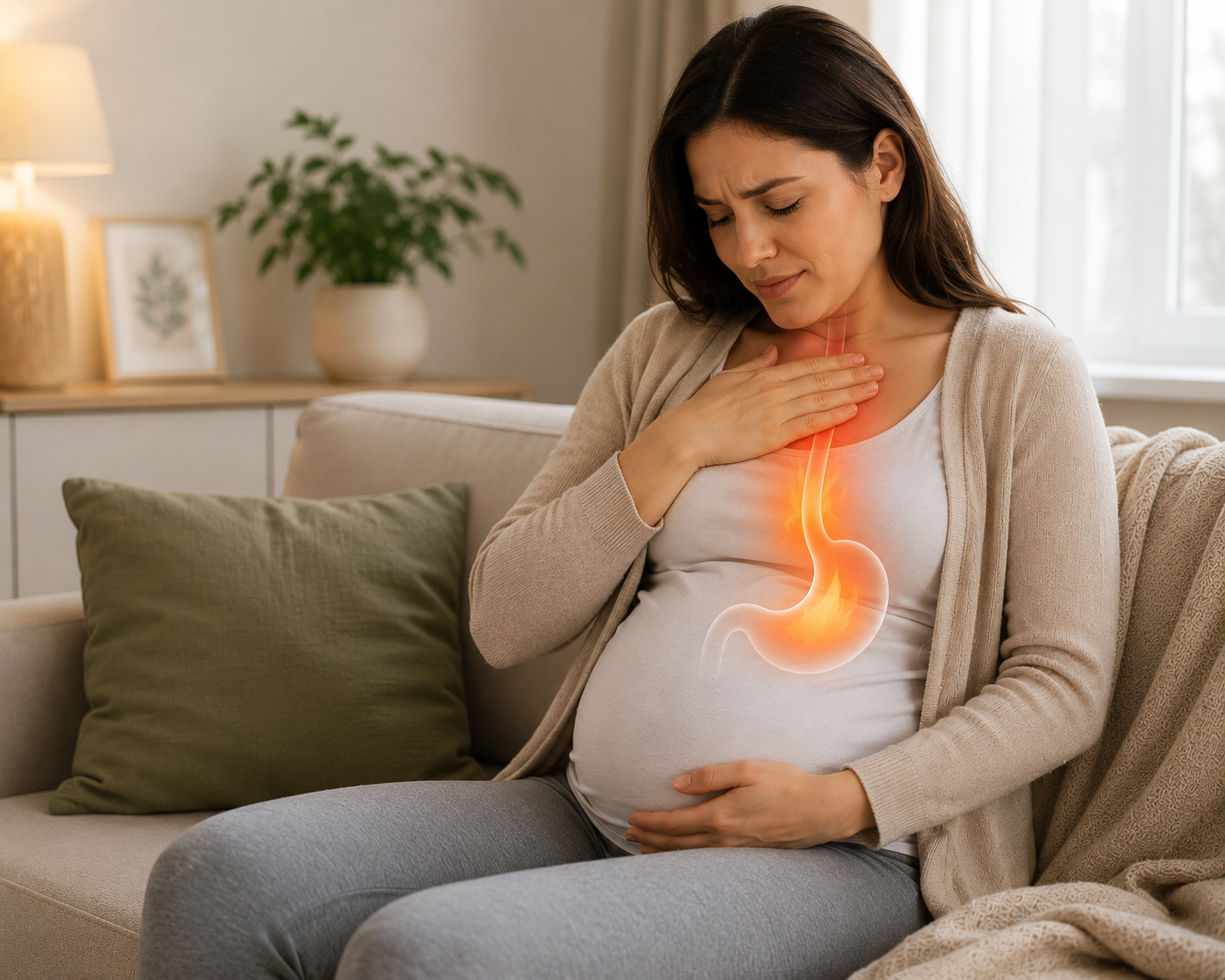
In short: Heartburn during pregnancy occurs in 17-45% of women in the first trimester and in 70-85% in the third. The reason is the relaxation of the lower esophageal sphincter under the influence of progesterone and the pressure of the uterus on the stomach. Small portions of food, rejection of trigger foods, elevated head position at night and safe antacids help.
Why does heartburn occur during pregnancy?
Heartburn is a burning sensation in the chest or throat that occurs when acidic stomach contents are thrown into the esophagus (gastroesophageal reflux). During pregnancy, there are two main mechanisms that make heartburn so common.
Relaxation of the lower esophageal sphincter. Progesterone relaxes smooth muscle throughout the body — including the valve between the esophagus and stomach (lower esophageal sphincter, LES). Normally, it is tightly closed and does not allow acid to rise. During pregnancy, its tone decreases, and the acid enters the esophagus more easily.
Pressure of the growing uterus. In the third trimester, the uterus significantly shifts the stomach upwards and presses on it. This reduces its volume and increases intra-abdominal pressure - it is literally "easier" for the acid to go up. That is why heartburn increases by the end of pregnancy, even if it did not bother you before.
Heartburn during pregnancy is not a dangerous condition, but it significantly affects the quality of life and the quality of sleep. Most of the symptoms disappear after childbirth, but during pregnancy it requires correction.
What provokes heartburn: foods and habits
Not all foods provoke heartburn equally, and each woman has her own triggers. Nevertheless, there are general patterns.
Foods that increase heartburn: spicy and spicy dishes, fatty and fried foods, coffee and strong tea, chocolate and mint (they relax the NPS), citrus juices and tomatoes, carbonated drinks, onions, garlic.
Habits that provoke heartburn: large meals, lying down immediately after eating, horizontal position when eating or immediately after, tight clothing that squeezes the abdomen, smoking (additional relaxing effect on the LES).
How to Change Your Diet to Reduce Heartburn
Changing the diet and composition is the first and most effective step. Here's what works for most women:
Frequent small meals. Eat 5-6 small meals a day instead of 2-3 large portions. Less food volume in the stomach = less pressure = less reflux.
Do not lie down immediately after eating. After each meal, stay upright for at least 1-2 hours. The last meal is 2-3 hours before bedtime.
Eat slowly. Fast food leads to swallowing air and overloading the stomach.
Drink between meals, not during. A large amount of liquid along with food increases the volume of stomach contents.
Keep a food diary. Write down after which foods heartburn worsens in you, and exclude them. Read more about trimester nutrition .
Body position and heartburn
An elevated position of the head and upper body during sleep is one of the most effective non-drug methods of combating nighttime heartburn. Raise the headboard of the bed by 15-20 cm with the help of stands under the legs of the bed or a special wedge-shaped mattress. Ordinary pillows under the head are less effective - they do not lift the entire body.
Sleeping on the left side also reduces the severity of reflux: in this position, the stomach is below the esophagus. About the best sleeping positions during pregnancy - in a separate article.
Safe remedies for heartburn during pregnancy
Antacids (acid neutralizers). Preparations based on magnesium and aluminum hydroxide, calcium carbonate are considered relatively safe during pregnancy with short-term use. Maalox, Gaviscon, Rennie are often used. Do not take antacids at the same time as vitamins and iron preparations - they disrupt their absorption.
Alginates. Drugs based on alginic acid (Gaviscon) form a gel on the surface of the stomach contents and mechanically prevent reflux. They are considered one of the safest for pregnant women.
Omeprazole and other proton pump inhibitors (PPIs). For severe, persistent heartburn that does not respond to other methods, the doctor may prescribe PPIs. Accumulated data on the use of omeprazole during pregnancy did not reveal a significant risk to the fetus, but the prescription should be medical.
Folk remedies. A glass of warm milk can temporarily neutralize the acid. Sugar-free chewing gum stimulates salivation and helps neutralize acid in the esophagus. Baking soda is not recommended during pregnancy: it contains a lot of sodium and can disrupt the acid-base balance.
Heartburn and early toxicosis
In the first trimester, heartburn is often combined with early toxicosis. During this period, dietary adjustments are especially important: small portions, avoiding spicy and fatty foods. If nausea prevents you from eating normally, deal with it first.
When to see a doctor
See a doctor if:
Heartburn is severe, constant and interferes with normal eating and sleep.
Antacids do not help or are needed daily.
There is pain when swallowing or difficulty swallowing food.
Heartburn is accompanied by vomiting, blood or black stools - this is a sign of bleeding from the gastrointestinal tract.
Chest pain that is difficult to distinguish from cardiac pain.
Heartburn is severe, constant and interferes with normal eating and sleep.
Antacids do not help or are needed daily.
There is pain when swallowing or difficulty swallowing food.
Heartburn is accompanied by vomiting, blood or black stools - this is a sign of bleeding from the gastrointestinal tract.
Chest pain that is difficult to distinguish from cardiac pain.
Frequently Asked Questions
Is it true that heartburn means that the child has a lot of hair?
This popular belief received unexpected indirect confirmation in one American study in 2006, but its authors emphasize that the connection is probably explained by the general hormonal background, and not by the hair itself. Heartburn is a symptom of gastroesophageal reflux, not an "indicator of hair".
Will heartburn go away after childbirth?
Yes. For most women, pregnancy-related heartburn goes away within a few days to a few weeks after giving birth, when progesterone levels return to normal and the uterus stops pressing on the stomach.
Conclusion
Heartburn is an unpleasant but common companion of pregnancy, especially in the second or third trimester. Frequent small meals, avoidance of trigger foods, an upright post-meal position, and a raised headboard help most women. In case of severe heartburn, safe antacids are taken after consultation with a doctor. Severe and constant heartburn requires medical evaluation.
Bibliography
- ACOG. Heartburn in Pregnancy. FAQ, 2020. https://www.acog.org/womens-health/faqs/heartburn-in-pregnancy
- Richter JE. Review article: the management of heartburn in pregnancy. Aliment Pharmacol Ther. 2005;22(9):749-757. https://pubmed.ncbi.nlm.nih.gov/16225483/
- Ali RA, Egan LJ. Gastroesophageal reflux disease in pregnancy. Best Pract Res Clin Gastroenterol. 2007;21(5):793-806. https://pubmed.ncbi.nlm.nih.gov/17889809/
- NICE. Antenatal care. NICE Guideline NG201, 2021. https://www.nice.org.uk/guidance/ng201
- Ministry of Health of the Russian Federation. Clinical recommendations: Normal pregnancy. Ministry of Health of the Russian Federation, 2023. https://cr.minzdrav.gov.ru/
This material is for informational purposes only and does not constitute medical advice and is not a substitute for medical advice. If a child's sleep is accompanied by alarming symptoms, a pronounced deterioration in health, problems with breathing, feeding or weight gain, it is necessary to consult a qualified medical specialist as soon as possible, and not rely only on information from the Internet.