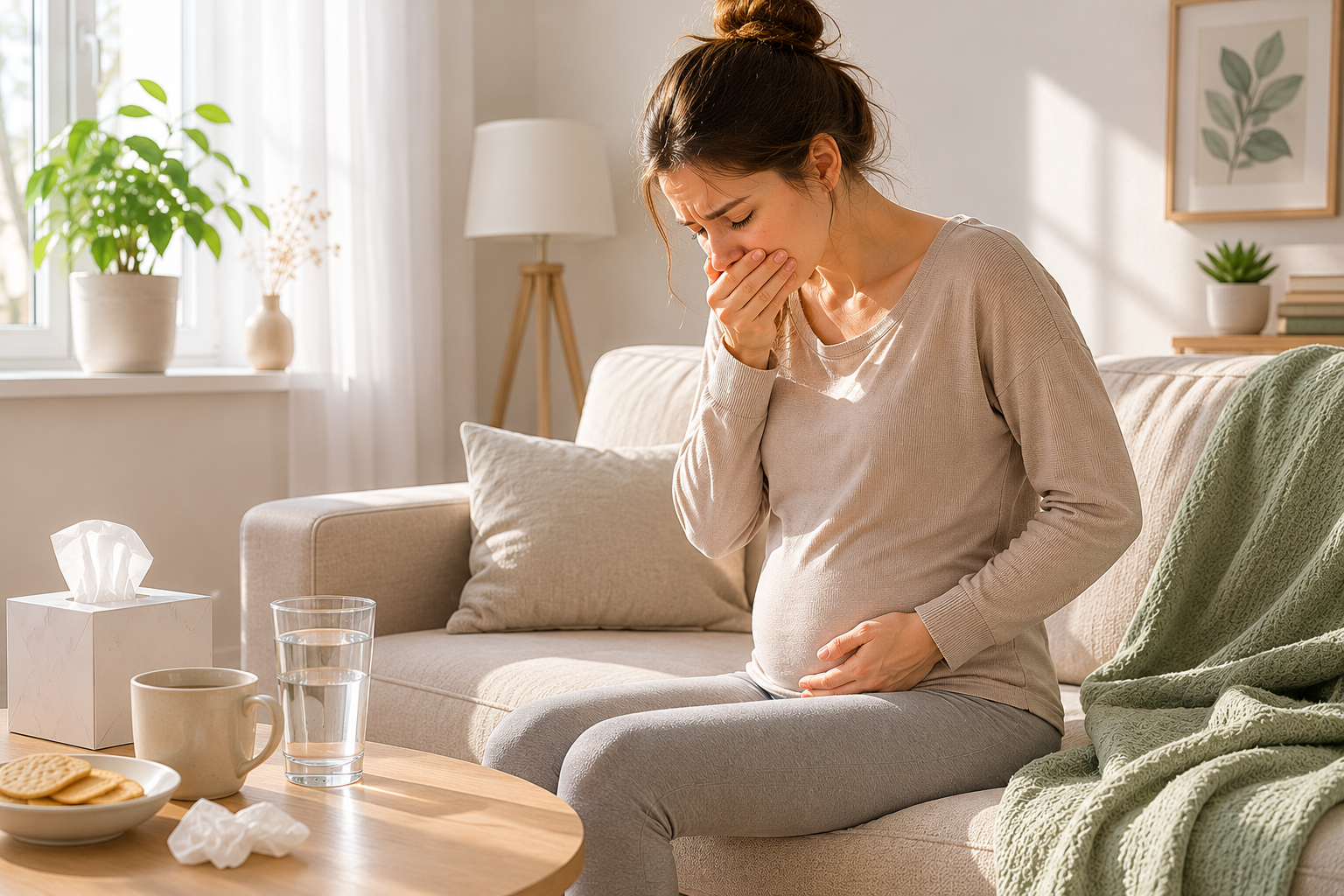
In short: Early toxicosis - nausea and vomiting in the first trimester - occurs in 70-80% of pregnant women. Most often it disappears by 12-14 weeks. Frequent small meals, ginger, fresh air and sufficient rest help. If you vomit more than 5 times a day or you cannot drink water, you need medical help.
What is early toxicosis
Early toxicosis (or nausea and vomiting of pregnancy, NRB) is a complex of symptoms of the first trimester, including nausea, vomiting, increased salivation and intolerance to odors. Despite the stable name "morning sickness", symptoms can appear at any time of the day and for many women are not limited to the morning.
This is one of the first signs of pregnancy: nausea, as a rule, begins in the 4-6th week of pregnancy (counting from the first day of the last menstruation) and reaches its peak around the 8-10th week. For most women, symptoms subside by 12 to 14 weeks, although some may persist longer.
Why does toxicosis occur?
The exact cause of early toxicosis has not yet been definitively established, but scientists identify several key factors.
The hormone hCG. The level of human chorionic gonadotropin increases sharply in the first trimester - exactly at the period when nausea is most pronounced. Women with twins or triplets have higher levels of hCG, and their toxicosis is usually stronger.
Estrogen. High levels of estrogen have also been linked to increased nausea. In addition, this hormone sharpens the sense of smell: smells, previously neutral, suddenly become unbearable.
Slowing down the gastrointestinal tract. Progesterone relaxes smooth muscles, including the muscles of the stomach and esophagus. The stomach empties more slowly, which increases nausea and provokes heartburn.
Genetic predisposition. If your mother had severe toxicosis, the likelihood that you will have it is higher. Studies from 2018-2023 indicate the role of the GDF15 gene, which is produced by the placenta.
Degrees of severity of toxicosis
Mild – nausea without vomiting or rare vomiting (up to 3 times a day). In general, the state of health is not disturbed, there is no weight loss. Most women cope on their own.
Moderate degree – vomiting 4-10 times a day, moderate weakness, slight weight loss (up to 3 kg). It requires a doctor's consultation and, possibly, medication support.
Severe degree (hyperemesis of pregnancy) - uncontrollable vomiting more than 10 times a day, dehydration, significant weight loss (more than 5% of the baseline), electrolyte imbalance. Requires hospitalization and intravenous fluids.
What helps with toxicosis: non-drug methods
Frequent small meals. An empty stomach increases nausea. Eat small meals every 2-3 hours. For many, it helps to eat a few crackers or dry cookies while still in bed, before getting up in the morning.
Ginger. Several meta-analyses confirm that ginger reduces nausea during pregnancy. Can be used as a tea (1-2 g of dry ginger per day), candies, capsules or fresh root in dishes.
Vitamin B6 (pyridoxine). Officially recommended by ACOG to reduce nausea in pregnancy at a dose of 10-25 mg 3 times a day. Consult your doctor before you start taking it. Read about other necessary vitamins in the article What vitamins do pregnant women need.
Wrist acupressure. Point P6 (nei-guan) on the inside of the wrist - when pressing on it with special bracelets or a finger, some women reduce nausea. The method is safe and can be used in conjunction with other methods.
Fresh air and walks. Stuffy rooms and pungent smells increase nausea. Regular quiet walks and ventilation of the room help many women. For more information about safe activity, see the article Sport and physical activity during pregnancy.
Rest. Fatigue increases nausea. Give yourself permission to rest more than usual, especially in the first trimester. Read about the correct sleeping position in the article How to sleep during pregnancy.
Avoid triggers. Write down what smells, foods, or situations trigger nausea and avoid them if possible. Often the triggers are fried meat, coffee, perfume, spicy dishes.
Nutrition for toxicosis
During the period of toxicosis, the main task is not optimal nutrition, but at least some nutrition. Eat what you can eat: crackers, rice, bananas, potatoes, boiled chicken – all of these are fine. Cold food is better tolerated than hot food because it has less odor.
Avoid fatty, spicy, sweet foods in large quantities - they slow down the emptying of the stomach and increase nausea. Drink in small sips, but often: dehydration is a serious risk with severe toxicosis. Read about nutritious nutrition by trimester in the article Nutrition during pregnancy by trimester.
Drug treatment of toxicosis
If non-drug methods do not help, the doctor may prescribe drugs. In Russia and the world, vitamin B6 (pyridoxine), doxylamine, metoclopramide, ondansetron and other drugs are used to treat nausea during pregnancy - the choice depends on the severity and duration of pregnancy. It is categorically not recommended to take antiemetic drugs on your own.
In case of hyperemesis of pregnancy (severe form of toxicosis), hospitalization is indicated: intravenous administration of saline solutions, glucose, vitamins, and, if necessary, parenteral nutrition.
Myths about toxicosis
"Toxicosis is a sign of a strong child.") This is a folk myth. Severe toxicosis does not mean that the fetus develops better. Studies show that mild to moderate toxicosis slightly reduces the risk of miscarriage, but severe hyperemesis can harm both mother and baby.
"You need to eat for two so that the child is full." In the first trimester, the need for calories practically does not increase. What matters is the quality, not the quantity, of the food.
When to see a doctor
Urgently consult a doctor or call an ambulance if:
Vomiting is repeated more than 5 times a day and you cannot hold water.
You have lost more than 2-3 kg in a short time.
Urine has become dark and very sparse , a sign of dehydration.
You feel very weak, dizzy, cannot get up.
Nausea appeared after the 14th week or increased sharply in the second half of pregnancy - this may be a sign of late toxicosis (gestosis).
Vomiting is repeated more than 5 times a day and you cannot hold water.
You have lost more than 2-3 kg in a short time.
Urine has become dark and very sparse , a sign of dehydration.
You feel very weak, dizzy, cannot get up.
Nausea appeared after the 14th week or increased sharply in the second half of pregnancy - this may be a sign of late toxicosis (gestosis).
Frequently Asked Questions
Is toxicosis dangerous for a child?
Mild and moderate toxicosis, as a rule, does not harm the fetus. The mother's body redistributes nutrients so that the child receives what he needs. Severe hyperemesis, in which the mother loses weight significantly and becomes dehydrated, requires treatment - in this case, both the mother and the child suffer.
There is toxicosis, but there is no pregnancy – is it possible?
Nausea and other symptoms similar to toxicosis can occur with gastritis, intestinal infections, stress, and the intake of certain vitamins. A hCG test or blood test will help confirm or rule out pregnancy.
Is it possible to fly on an airplane with severe toxicosis?
With severe toxicosis, air travel is extremely uncomfortable and can increase nausea due to pressure drops and specific odors in the cabin. If travel is necessary, talk to your doctor about ways to relieve symptoms in advance.
Conclusion
Early toxicosis is a frequent and unpleasant, but usually not dangerous companion of the first trimester. Frequent small meals, ginger, vitamin B6 and adequate rest help. If toxicosis unsettles you and does not lend itself to home methods, consult a doctor: there are safe and effective drugs. Severe toxicosis with dehydration requires urgent medical care.
Bibliography
- ACOG Practice Bulletin No. 189. Nausea and Vomiting of Pregnancy. Obstet Gynecol. 2018;131(1):e15-e30. https://pubmed.ncbi.nlm.nih.gov/29266075/
- Fejzo MS, et al. Placenta and appetite genes GDF15 and IGFBP7 are associated with hyperemesis gravidarum. Nat Commun. 2018;9:1178. https://pubmed.ncbi.nlm.nih.gov/29567959/
- Matthews A, et al. Interventions for nausea and vomiting in early pregnancy. Cochrane Database Syst Rev. 2015. https://pubmed.ncbi.nlm.nih.gov/26348534/
- NICE. Nausea/vomiting in pregnancy. CKS, 2023. https://cks.nice.org.uk/topics/nausea-vomiting-in-pregnancy/
- Ministry of Health of the Russian Federation. Clinical recommendations: Normal pregnancy. Ministry of Health of the Russian Federation, 2023. https://cr.minzdrav.gov.ru/
- Viljoen E, et al. A systematic review and meta-analysis of the effect and safety of ginger in the treatment of pregnancy-associated nausea and vomiting. Nutr J. 2014;13:20. https://pubmed.ncbi.nlm.nih.gov/24642205/
This material is for informational purposes only and does not constitute medical advice and is not a substitute for medical advice. If a child's sleep is accompanied by alarming symptoms, a pronounced deterioration in health, problems with breathing, feeding or weight gain, it is necessary to consult a qualified medical specialist as soon as possible, and not rely only on information from the Internet.