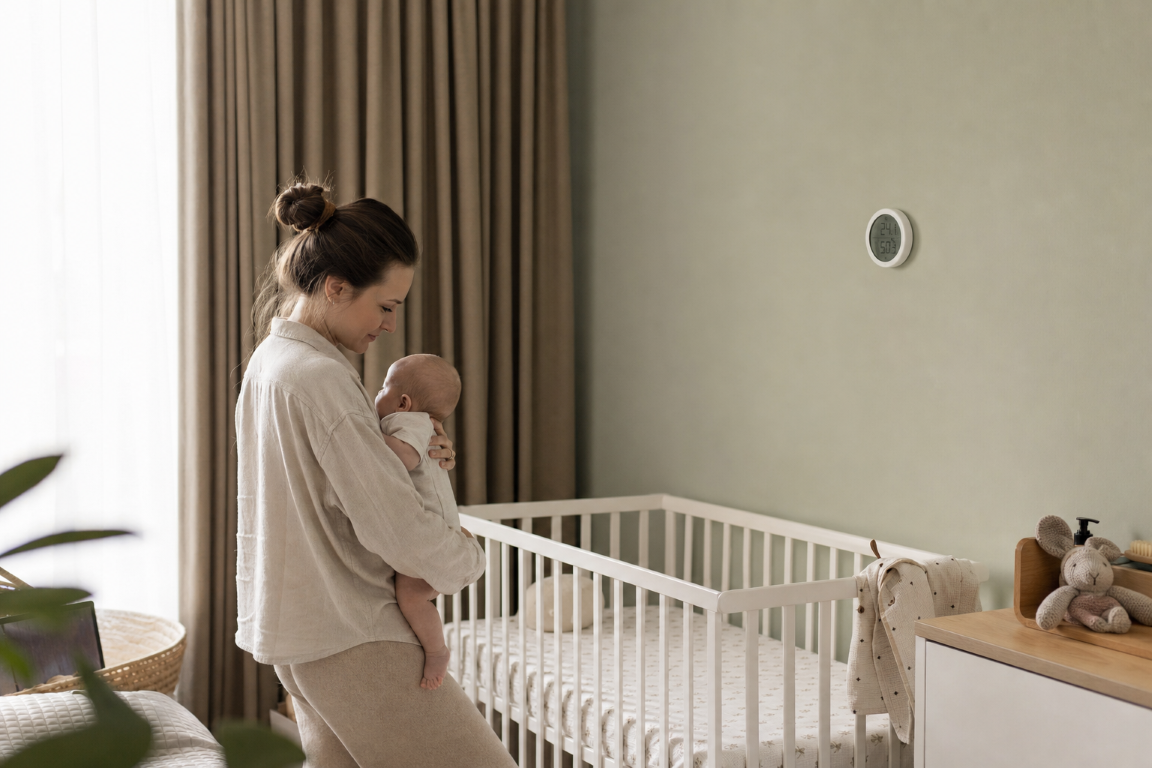
In short: The optimal temperature for a child's sleep is 18-22 °C, humidity is 50-70%, and the room should be dark. Overheating is more dangerous than coolness. Regular ventilation and properly selected sleeping clothes are more important than any "special" devices.
Why sleep conditions are important
The quality of sleep depends not only on the mode and associations with sleep, but also on the physical conditions in the room. Inappropriate temperature, bright light or dry air can disrupt sleep even in a child with an excellent regimen. The good news is that creating the right conditions is simple and inexpensive.
Temperature
The recommended temperature in the children's room is 18-22 °C. Most pediatric organizations (AAP, NICE) recommend staying closer to the lower end of this range, as overheating is a risk factor for SIDS.
How to understand that the child is comfortable:
- The back of the neck is warm, but not wet - normal
- Wet hair, red skin on the cheeks, sweating – the child is overheated
- Cold hands and feet are not an indicator: in infants, peripheral blood circulation is imperfect
The rule of sleepwear: the child should be dressed in the same way as an adult, plus one light layer. For example, if you are comfortable in a T-shirt, dress your baby in a thin bodysuit plus a light sleepsuit. Swaddling warms - take this into account when choosing clothes for a diaper.
Air humidity
The optimal humidity in the nursery is 50-70%. Too dry air (below 40%) irritates the mucous membranes of the respiratory tract, causes dryness in the nose, which can disturb sleep and provoke congestion. It is especially relevant in winter when central heating is working.
- A humidifier is a good solution, especially during the heating season. Cold steam or ultrasonic models are preferable.
- Regular wet cleaning also helps to maintain humidity levels.
- A hygrometer (humidity sensor) is an inexpensive way to monitor the microclimate.
Lighting
Darkness is the main stimulus for the production of melatonin, the sleep hormone. Even a small amount of light can suppress its production and disrupt sleep.
- For a night's sleep: maximum dimming. Blackout curtains or blackout are the best investment in a child's sleep. It is especially important in the summer, when it is already light at 4-5 in the morning - this is one of the most common reasons why a child wakes up at 5 in the morning.
- For daytime naps: the same – darkening the room significantly lengthens daytime naps.
- Night light: if the child is scared or needs night feeding, a red-orange night light is acceptable (minimally suppresses melatonin). Avoid blue and white night lighting.
About screens: The blue light from phones, tablets, and TVs strongly inhibits melatonin. Exclude screens at least 1 hour before bedtime for children under 2 years of age - completely, for children older - at least 1 hour.
Sound
For most children, a quiet or moderately quiet background is optimal. Complete silence, in fact, is not necessary - the absence of sharp, unpredictable sounds is important. White noise helps to create a uniform background and mask household noises.
Bed safety
Regardless of the microclimate, the safety of the crib is a priority:
- Firm mattress, tightly stretched sheet
- No pillows, blankets, sides in the crib for babies under 12 months
- The child sleeps only on his back (before turning over on his own)
- The distance between the bars of the crib is no more than 6 cm
How to ventilate the nursery
Regular ventilation saturates the air with oxygen and helps maintain an optimal temperature. Recommendations: ventilate before going to bed (10-15 minutes, the child is not in the room), in summer - through ventilation is possible, in winter - through an adjacent room, without a draft.
When to see a doctor
- A child often wakes up with a stuffy nose without signs of SARS - allergies or too dry air are possible
- A child regularly sweats in his sleep - it is worth discussing with a pediatrician (including excluding rickets in children under one year old)
- Despite all the improvements in conditions, sleep does not improve
Frequently Asked Questions
Do I need a special device to monitor the temperature?
Not necessarily. A simple thermometer on the wall and your feelings are quite enough. Smart climate sensors are convenient, but not necessary.
Is it possible to cover a child with a thin blanket?
For children under 12 months, blankets in the crib are not recommended due to the risk of suffocation. Instead of a blanket, use a replacement sleeping bag - it provides warmth, does not slip and is safe.
Conclusion
The right conditions for sleep are not expensive gadgets, but basic things: optimal temperature, humidity, darkness and a quiet background. By creating them once, you will make a great contribution to the quality of sleep for the whole family. Good sleep is the sum of the regimen, age norms , and a comfortable environment.
Bibliography
- AAP. "How to Keep Your Sleeping Baby Safe." HealthyChildren.org, 2022.
- Moon R.Y., et al. "SIDS and Other Sleep-Related Infant Deaths." Pediatrics, 2016; 138(5).
- NICE. "Postnatal Care." NICE Guideline NG194, 2021.
- Bremer A.A., et al. "Environmental Determinants of Children's Sleep Quality." Journal of Developmental & Behavioral Pediatrics, 2018.
This material is for informational purposes only and does not constitute medical advice and is not a substitute for medical advice. If a child's sleep is accompanied by alarming symptoms, a pronounced deterioration in health, problems with breathing, feeding or weight gain, it is necessary to consult a qualified medical specialist as soon as possible, and not rely only on information from the Internet.