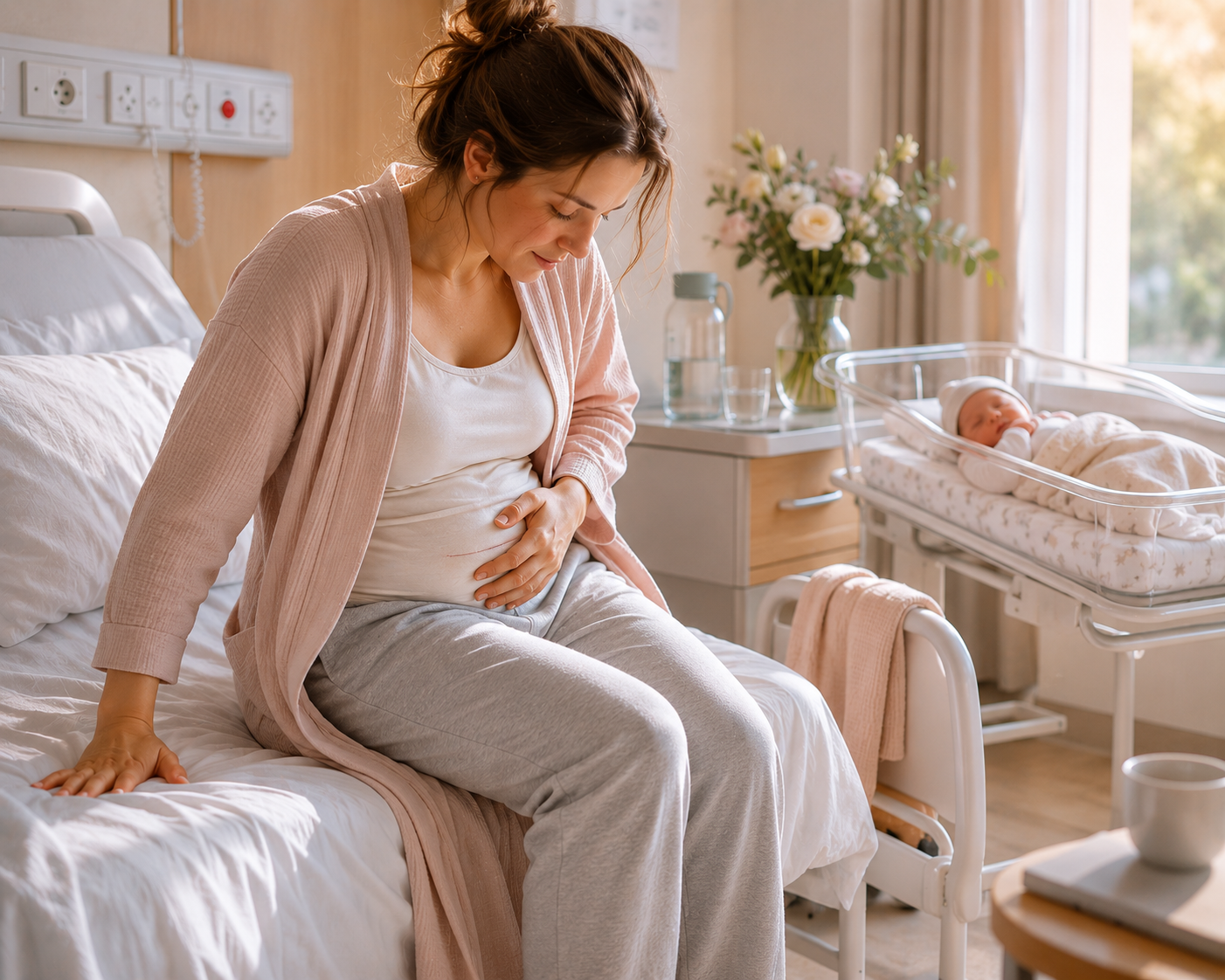
In short: a cesarean section is an abdominal operation, and recovery from it takes 6-8 weeks. The first day is the most difficult. Getting up early, pain relief and the help of loved ones make recovery more comfortable.
First hours after surgery
Immediately after the cesarean section, you are transferred to the intensive care unit for 2-4 hours. Anesthesia gradually wears off - sensitivity in the legs returns, shivering and chills may appear (a normal reaction to anesthetics). The IV catheter and urinary catheter remain in place until the next morning.
With regional anesthesia (spinal or epidural), you remain conscious and can hold your baby. If the maternity hospital practices "soft cesarean", skin-to-skin contact will begin right in the operating room.
First day: early rise
Getting up early (6-12 hours after surgery) is not cruelty, but a necessity. Movement:
- prevents the formation of blood clots (postoperative thromboembolism is a serious complication);
- normalizes intestinal peristalsis;
- speeds up recovery.
Get up for the first time only with the help of a nurse. It is normal if you feel dizzy – slowly sit on the bed, sit for a minute, then get up.
Pain and pain relief
The pain after a cesarean is real, and it needs to be fought. Poorly controlled pain slows recovery and interferes with breastfeeding. The anesthesia regimen usually includes:
- nonsteroidal anti-inflammatory (ibuprofen) – basis;
- paracetamol – supplement;
- opioids - for severe pain, a short course.
All these drugs are allowed during breastfeeding in therapeutic doses. Report pain: don't endure.
Seam care
The suture is usually horizontal, above the pubis ("bikini slit"). Care:
- the first 24-48 hours – the sterile bandage is changed by a nurse;
- from the 3rd day – wash the seam with soap and water in the shower, gently pat dry with a towel;
- do not wet the seam in the bath and pool for 6-8 weeks;
- wear loose underwear so that the elastic band does not press on the seam.
Skin staples or non-absorbable sutures are removed after 7-10 days. The internal sutures dissolve on their own. Read more about the care of sutures in the article stitches after childbirth.
Lochia after cesarean
Postpartum discharge (lochia) is also present after a cesarean - the uterus still contracts and cleanses. The volume may be slightly less than after natural childbirth, but the character is the same: first red, then pinkish, then yellowish. Duration – 4-8 weeks.
Physical activity and restrictions
After a cesarean section, it is prohibited:
- lift weights (more than 3-4 kg) for the first 6 weeks;
- do sports with a load on the abs - at least 8 weeks;
- drive until the pain subsides and you get permission from a doctor (usually 4-6 weeks).
Allowed and necessary: walking from the first day, breathing exercises, light movements of arms and legs in bed. Kegel exercises can be started in the first days.
Return to normal life
Most women feel significantly better by the end of the second week. Full recovery – 6-8 weeks. It is recommended to resume sex no earlier than 6-8 weeks and after a doctor's examination. In the next pregnancy , the scar on the uterus will require observation - do an ultrasound of the scar in the third trimester.
When to see a doctor
Seek immediate medical attention after discharge if:
- temperature above 38 °C;
- increasing abdominal pain that is not relieved by pills;
- redness, swelling, discharge of fluid from the suture;
- very abundant lochia (more sanitary napkin per hour);
- pain in the leg or shortness of breath (a possible sign of thrombosis).
Frequently Asked Questions
When can you take a shower after a cesarean section?
Usually 24 to 48 hours after surgery, when the bandage is removed. Bath and pool – no earlier than 6 weeks.
Does a cesarean affect breastfeeding?
No. Milk comes regardless of the method of delivery, although after a cesarean it sometimes appears a day or two later. Early attachment and frequent feedings solve this problem.
Is cesarean not a "real" birth?
This is a common and harmful myth. A cesarean is a medical operation that saves lives. The way a child is born does not determine the quality of motherhood. If you still have difficult feelings about a cesarean section, talk to a psychologist – this is called "birth trauma", and they work with it.
Conclusion
Recovery from a cesarean section takes time and patience. Getting up early, proper anesthesia, suture care, and the help of loved ones are the keys to comfortable rehabilitation. Do not rush yourself and listen to your body.
Bibliography
- ACOG Practice Bulletin No. 183. Postpartum Hemorrhage. Obstet Gynecol. 2017.
- NICE guideline NG192. Caesarean birth. 2021. https://www.acog.org/womens-health/faqs/cesarean-birth
- WHO. WHO recommendations for augmentation of labour. 2014. https://www.who.int/publications/i/item/9789241507363
- Ministry of Health of the Russian Federation. Clinical guidelines: Caesarean section. 2021. https://cr.minzdrav.gov.ru/
- Kainu JP et al. Recovery from caesarean section: a prospective study. Acta Anaesthesiol Scand. 2016.
This material is for informational purposes only and does not constitute medical advice and is not a substitute for medical advice. If a child's sleep is accompanied by alarming symptoms, a pronounced deterioration in health, problems with breathing, feeding or weight gain, it is necessary to consult a qualified medical specialist as soon as possible, and not rely only on information from the Internet.