In short: Co-sleeping is practiced in many cultures and can make breastfeeding easier at night. However, for children under 6 months of age, it is associated with the risk of SIDS (sudden infant death syndrome). The AAP recommends sleeping separately in the same room, but not in the same bed.
What is co-sleeping and how common is it
Co-sleeping is a practice in which a child sleeps in the same bed with his parents or in close proximity to them. According to research, in Russia, co-sleeping is practiced by 30 to 60% of families with infants. In Asia, Africa and Latin America, the figure is even higher.
It is important to distinguish between two concepts : bed-sharing and room-sharing, when the crib or cradle of the baby is next to the parent's bed. The second option is recommended by most pediatric organizations as a compromise between safety and convenience.
Why parents choose co-sleeping
- Facilitation of nighttime feedings while breastfeeding
- The child is calmer, wakes up alone more often
- Mom sleeps better without getting up to the crib
- Cultural traditions and beliefs
- The child does not want to sleep separately
Risks of co-sleeping
The main risk is SIDS (sudden infant death syndrome) and strangulation. According to studies, the risk of a child dying in the same bed with parents is much higher than when sleeping in a separate crib. The risk is especially high for:
- Children under 4 months
- Preterm and low birth weight infants
- Children whose parents smoke (even if they don't smoke in bed)
- Cases where parents have taken alcohol, sedatives or are very tired
- Upholstered surfaces: sofas, water mattresses, soft feather beds
The position of the WHO and the AAP: both organizations recommend that a child under 1 year of age sleep in his crib or cradle - in the same room with the parents, but not in the same bed. This reduces the risk of SIDS by 50%.
Safety rules for co-sleeping
If you do practice co-sleeping, following the following rules reduces the risks:
- Put the baby only on his back, never on his stomach
- The mattress should be firm, the sheet should be tightly stretched
- No pillows, blankets, sides near the child's head
- The child should not lie between two adults
- Never practice co-sleeping on a couch or armchair
- Parents should not be under the influence of alcohol, sleeping pills, or extreme fatigue
- If the parent smokes, co-sleeping is unacceptable
Alternatives to co-sleeping
If you want to be close to your child at night, but are concerned about safety, there are intermediate solutions:
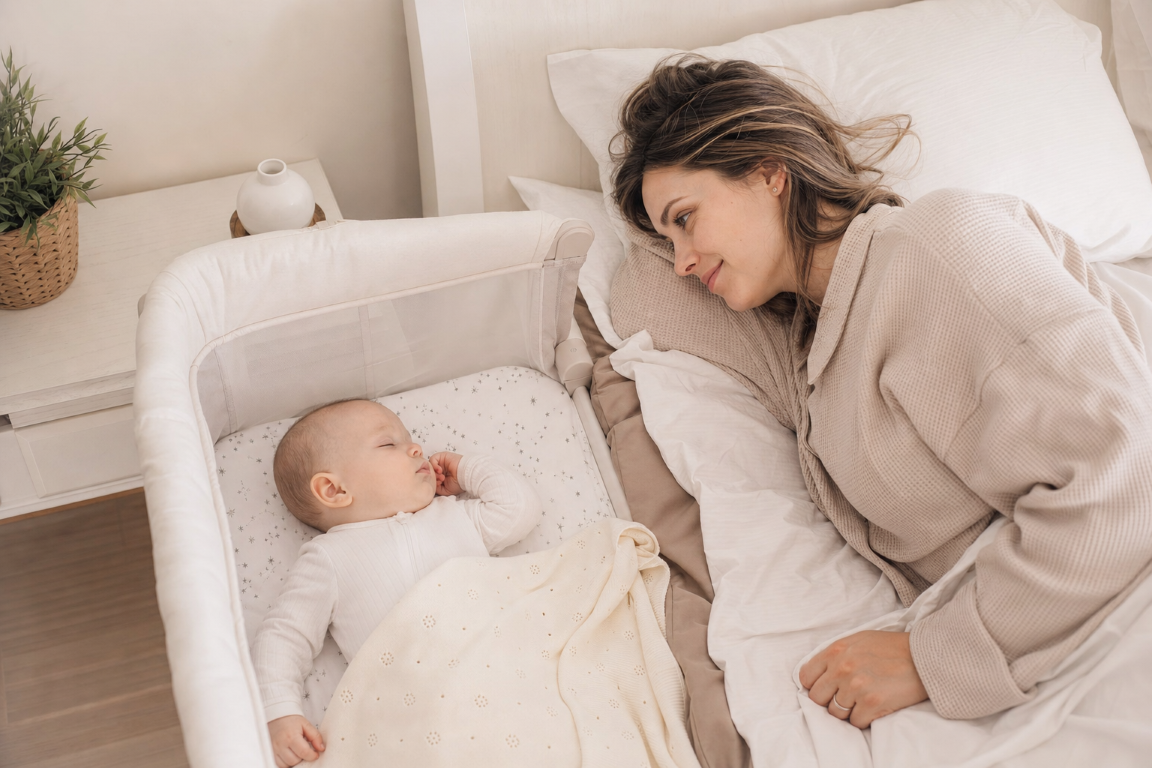
- Side car: A cot without one side that is attached to the parent's bed. The child is on a separate mattress, in sight and reach, but on his surface.
- Pool or cradle by the bed: the baby is nearby, but separately. This option is much safer than sleeping together in the same bed.
- Stable bedtime: the right sleep ritual and work on associations will help the baby get used to the crib faster.
Co-sleeping and breastfeeding
Studies show that co-sleeping is associated with longer breastfeeding – moms are more comfortable breastfeeding at night. This is a real plus. However, lactation experts note that if you follow the safety rules, it is also quite possible to breastfeed and maintain separate sleep. A cot is a good compromise.
How to Switch to Separate Sleep
If the child is used to sleeping together and you want to accustom him to a separate crib, act gradually. A sharp transition usually meets strong resistance. Soft styling methods are great for this transition. Gradual habituation takes 2-4 weeks.
When to see a doctor
- A child snores, breathes noisily in his sleep or pauses in breathing - signs of sleep apnea require examination by a pediatrician
- The child constantly requires co-sleeping, and this significantly worsens the quality of sleep of the whole family
- You have any doubts about the safety of the current situation
Frequently Asked Questions
Up to what age is co-sleeping safe?
The risks decrease after 6 months, when the child begins to have better control of head movements. However, even for children over 6 months of age, the AAP recommends their own bed.
Is it true that co-sleeping will "spoil" the child?
There is no scientific evidence that co-sleeping is harmful to the mental development of the child or makes him "dependent". With a gradual transition to separate sleep, most children adapt well.
Conclusion
Co-sleeping is a personal choice of the family. The main thing is to make this decision consciously, understanding the risks and following safety rules. If you want to be with your baby at night, but are worried about safety, a cot or a crib by the bed will be a good compromise.
Bibliography
- AAP. "Safe Sleep." HealthyChildren.org, 2022.
- Moon R.Y., et al. "SIDS and Other Sleep-Related Infant Deaths: Expansion of Recommendations for a Safe Infant Sleeping Environment." Pediatrics, 2011; 128(5): 1030–1039.
- Blair P.S., et al. "Bed-sharing in the Absence of Hazardous Circumstances: Is There a Risk of Sudden Infant Death Syndrome?" Paediatric and Perinatal Epidemiology, 2010.
- McKenna J.J., Gettler L.T. "There Is No Such Thing as Infant Sleep, There Is No Such Thing as Breastfeeding, There Is Only Breastsleeping." Acta Paediatrica, 2016.
- WHO. "Guidelines on Physical Activity, Sedentary Behaviour and Sleep for Children under 5 Years of Age." 2019.
This material is for informational purposes only and does not constitute medical advice and is not a substitute for medical advice. If a child's sleep is accompanied by alarming symptoms, a pronounced deterioration in health, problems with breathing, feeding or weight gain, it is necessary to consult a qualified medical specialist as soon as possible, and not rely only on information from the Internet.