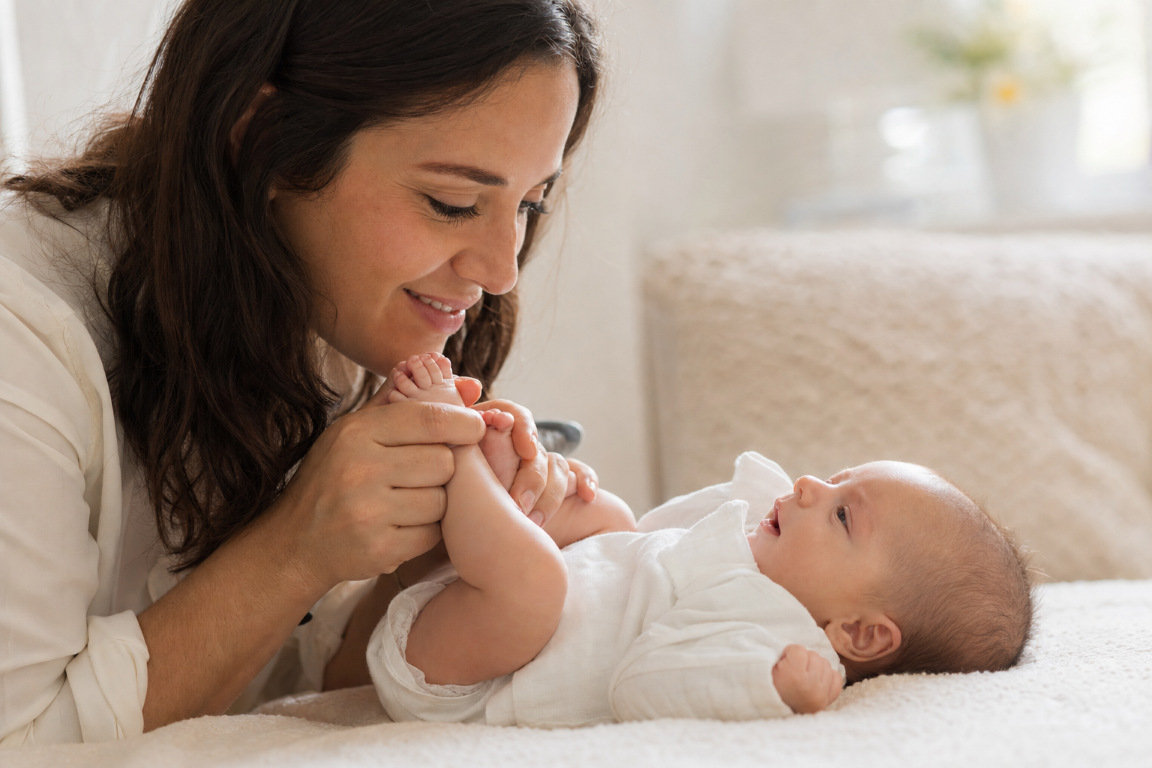
In short: Infant massage is primarily communication through touch. It strengthens the connection, reduces anxiety, and supports the nervous system. No special techniques are needed – gentle stroking in a calm environment is enough.
Why do you need a massage?
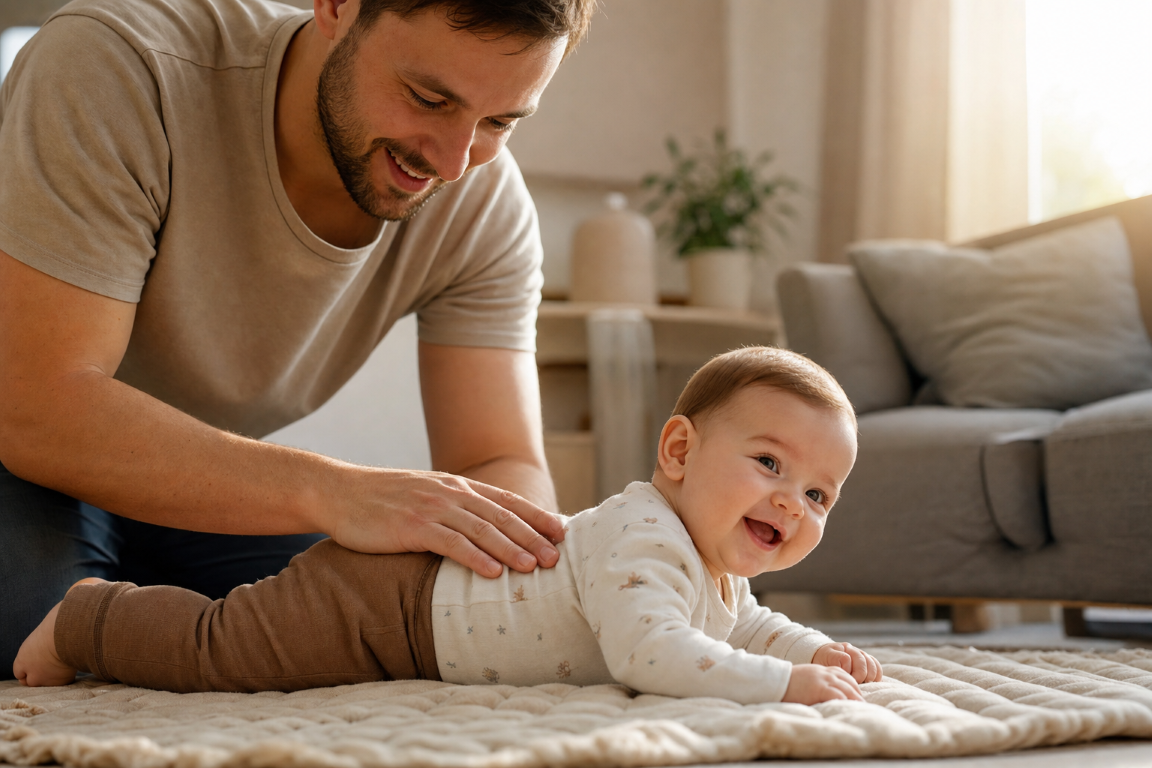
Scientific evidence confirms that regular tactile contact in the first months of life has a positive effect on development. Systematic reviews (including for the WHO) show that massage for full-term and premature babies reduces cortisol (stress hormone) levels, improves sleep and weight gain, and stimulates the nervous system.
In addition to the physical effect, massage is a one-on-one time with the child without distractions, which strengthens attachment.
At what age to start
Gentle stroking can be started from the first weeks of life - from the moment the umbilical ring heals (usually by 2-3 weeks). A full-fledged massage with a variety of techniques - from 1.5-2 months.
Up to 3 months – only light stroking. After 3 months, kneading and vibration are added. After 4 months, you can include exercises on a reflex basis.
How to prepare for a massage
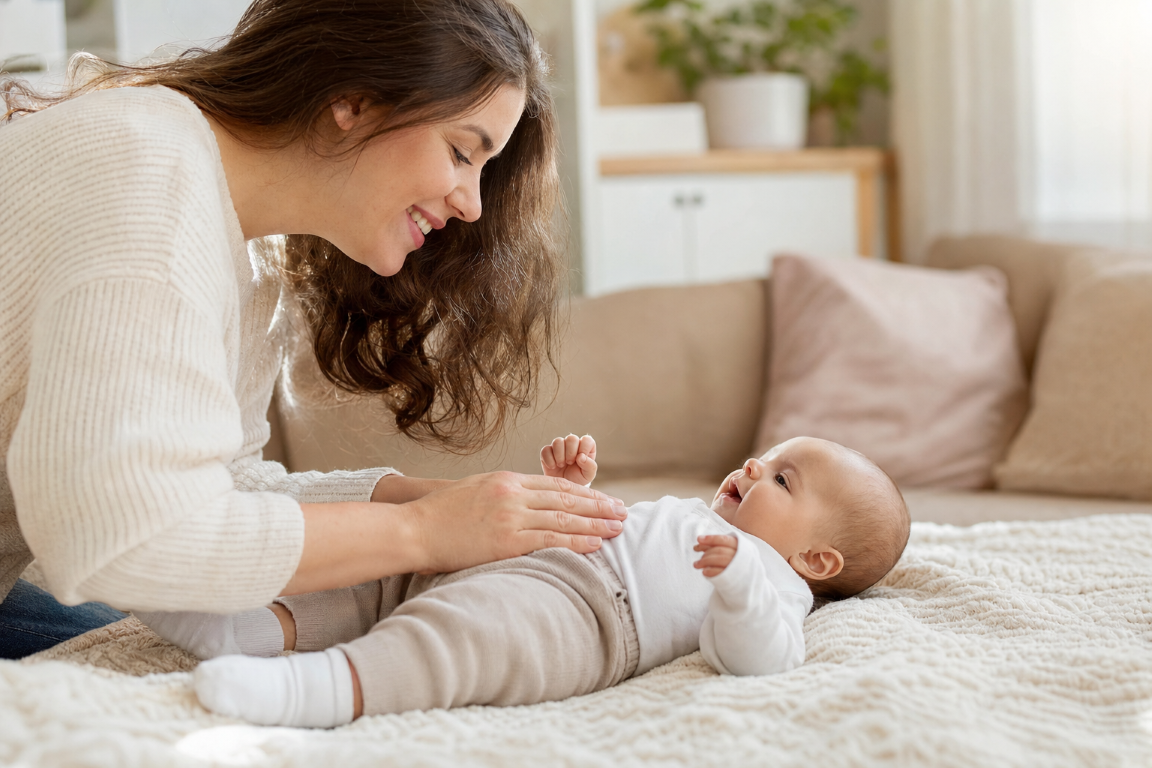
- Warm up the room to 22-24°C
- Wait 40 to 60 minutes after feeding
- The child should be in a good mood – not hungry, not wanting to sleep
- Take off jewelry, warm your hands
- Neutral oil (baby almond, sunflower) – optional, not necessary
- Calm quiet environment, eye contact, conversation with the child
Basic Techniques: Legs
Legs are a good start: they bother the baby less than the stomach or back.
- Stroking: Wrap both hands around your lower leg and slowly slide from your foot to your thigh. 4-6 times
- "Indian milk": one hand slides from top to bottom, followed by the other alternately. 4-6 times
- Foot: use your thumb to gently press the sole in the center - the child will bend his toes. Stroke the sole from the heel to the toes
- Fingers: gently roll each finger between your thumb and index finger
Basic techniques: abdomen
Abdominal massage is especially useful for colic and gas. Important: only clockwise (in the direction of bowel movement).
- Stroking clockwise: with the palm in a circle around the navel, slowly. 4-6 times
- "I-Love-You": Use your finger to draw the letter I (left of the navel from top to bottom), an inverted L (from the right side to the left and down), an inverted U (from the right side up, through the center, and down to the left). Helps with gas
- "Mill": with the back of your hand, slide across the abdomen from top to bottom alternately with both hands
Do not massage your abdomen if you have a fever, indigestion, or immediately after vaccination.
Basic Techniques: Back
Lay the baby on his stomach. This is a good workout in itself — tummy time with a nice addition.
- Stroking: both palms from shoulders to butt. 4-6 times
- "Rakes": with your fingers, gently "comb" the back from the spine to the sides
- Stroking along the spine: with two thumbs gently along the spine (not along the spine itself) from the neck to the tailbone
Regular back massage supports motor development: it strengthens the muscles needed for flipping and crawling.
Hands and face
- Hands: from wrist to shoulder, gentle kneading of the palm, rolling the fingers
- Face: very gentle – stroking the forehead from the center to the temples, cheeks from the nose to the ears. Many children like it
Contraindications
- Temperature above 37.5°C
- Acute infectious diseases
- Rash, skin irritation, diaper rash in the massage area
- Inguinal and umbilical hernias (without a doctor's permission)
- Seizures or neurological contraindications (check with a neurologist)
- First 3 days after vaccination
When to see a doctor
- The child always screams during massage - perhaps discomfort or hypertonia
- Pronounced asymmetry of tone – one side of the body is tense more than the other
- A pediatrician or neurologist referred you for a therapeutic massage - in this case, a specialist is needed
Frequently Asked Questions
Do you need a professional massage therapist?
For a healthy child, parental massage is completely sufficient. A professional children's massage therapist is needed when prescribing a therapeutic massage (for hypertonia, torticollis, motor disorders) - this is decided by a pediatrician or neurologist, and not by the parent himself.
How often to do a massage?
Every day, 10-15 minutes is ideal. If you can't do it every day, it's not scary. Even several times a week give an effect. The main thing is regularity and a pleasant atmosphere.
Conclusion
Massage is a simple and affordable tool that strengthens the bond with the child, supports his sensory development and brings pleasure to both. Start with 5 minutes of stroking and gradually master everything else.
Bibliography
- Field T. (2010). Touch for socioemotional and physical well-being: A review. Developmental Review, 30(4), 367–383.
- Vickers A. et al. (2004). Massage for promoting growth and development of preterm and/or low birth-weight infants. Cochrane Database of Systematic Reviews, Issue 2.
- WHO. (2004). Kangaroo Mother Care: A Practical Guide. Geneva: WHO.
- Glover V. et al. (2002). Baby massage — a review. Clinical Child Psychology and Psychiatry, 7(4), 603–614.
- Murashova, E.V. (2015). Children are "mattresses" and children are "catastrophes". Moscow: Samokat.
This material is for informational purposes only and does not constitute medical advice and is not a substitute for medical advice. If there are contraindications or the appointment of a therapeutic massage, consult a pediatrician or pediatric neurologist.