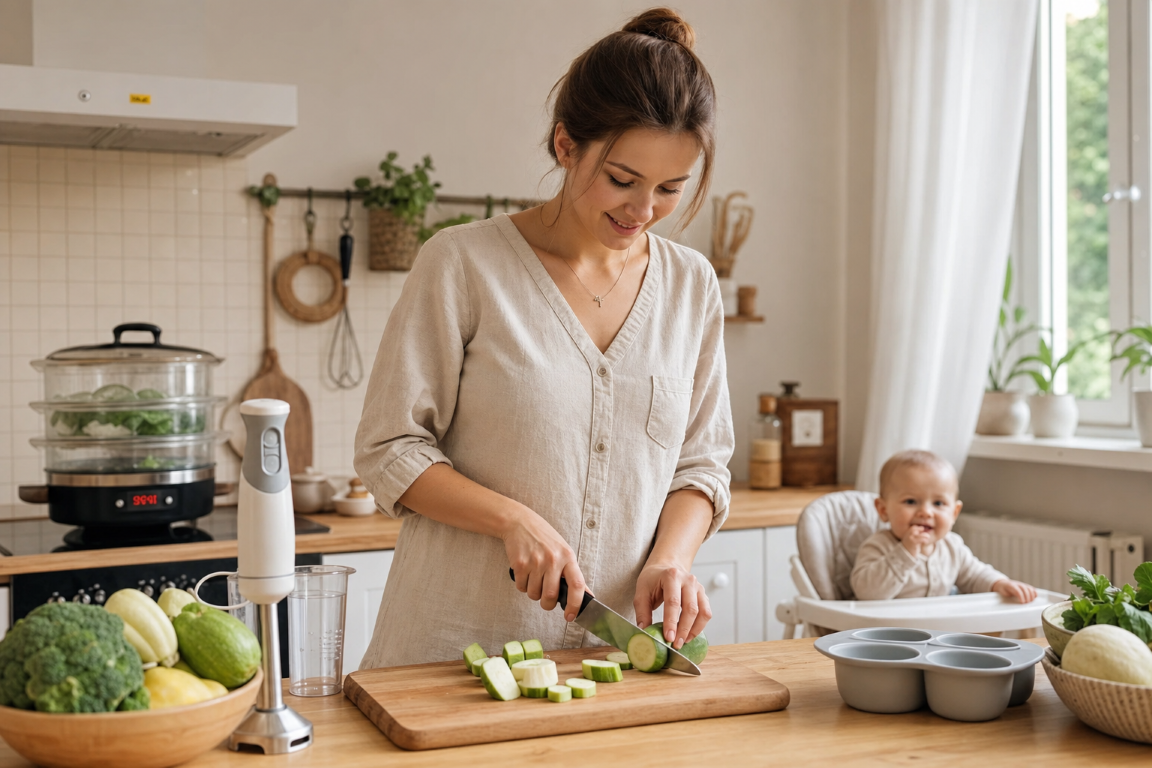
In short: Both canned and homemade puree are suitable for complementary foods. Industrial purees are standardized, safe and convenient on the go. Homemade ones allow you to control the ingredients and gradually introduce the child to "family" tastes. It is optimal to combine both options depending on the situation.
What is good about industrial (canned) food
Industrial purees for baby food are products designed specifically for young children. They undergo strict quality control, meet the standards for the absence of salt, sugar, dyes and preservatives. Many are fortified with vitamin C, iron or omega-3.
Pros of canned food:
- Standardized texture – ideal for the first steps of complementary foods.
- High requirements for the safety of raw materials (selection, control of pesticides and heavy metals).
- Long shelf life before opening - convenient on the road and traveling.
- The composition is precisely indicated - you can control what exactly you give to the child.
- Saves time: no need to cook separately.
- Convenient portions - you do not have to throw away the leftovers.
Cons:
- The cost is higher than home cooking.
- The taste is sometimes different from homemade - the child may not accept the "family" food later.
- Packaging (cans, plastic) is an environmental issue.
- Some multi-component purees contain starch or thickeners - it is important to read the composition.
What is good about homemade food
Homemade mashed potatoes are food that you prepare yourself from fresh ingredients. Many families prefer this option, appreciating control over the ingredients and the opportunity to gradually accustom the baby to the tastes of the family table.
Pros of homemade meals:
- Full control over the composition and quality of products.
- More economical when cooked regularly.
- The ability to choose a taste for the preferences of the child and family.
- Gradual acquaintance with "family" tastes reduces the risk of food neophobia.
- More varied textures as they grow older – the consistency changes easily.
Cons:
- It takes time and organization.
- The quality of raw materials depends on the available products - it is not always possible to check the level of pesticides in ordinary vegetables.
- The texture can vary from time to time.
- The shelf life is shorter - the cooked puree can be stored in the refrigerator for up to 24 hours, in the freezer - 1-2 months.
How to store homemade puree
The prepared puree can be frozen in silicone ice cube molds in portions of 15-30 ml. After freezing, transfer to a freezer bag with a signature (product, date). Defrost in the refrigerator or in a water bath – not in the microwave (uneven heating). Thawed puree is not refrozen.
What to look for when choosing canned food
- Ingredients: the first ingredient is a vegetable or fruit, without added salt, sugar, starch, flavorings.
- Age marking: "from 4 months" is a product with a neutral composition from the very beginning. "From 6 months" and "from 8 months" reflect the complexity of the composition.
- Shelf life and integrity of the package: swollen lid, broken tightness - a reason to throw away the puree.
- Manufacturer: Choose brands that have been certified for baby food in your country.
The issue of salt and sugar in baby food is critically important when choosing industrial products - not all "baby" purees are really without additives.
Is it possible to alternate?
Yes, and this is the optimal strategy for most families. At home - make mashed potatoes from seasonal vegetables, when traveling or when you are short of time - use canned vegetables. A child who is familiar with both options adapts more easily to different foods. The only rule is that both options must meet the age restrictions. About the procedure for introducing products - in the article "How to start complementary foods: first products".
When to see a doctor
- The child reacts to all brands of industrial food, but tolerates homemade food normally (or vice versa) – discuss with the pediatrician.
- Signs of allergyalso appeared after changing the product or brand.
- If you want to make sure that the homemade diet covers the needs of the child - the pediatrician or nutritionist will evaluate the menu.
Frequently Asked Questions
Are jarred purees worse in composition than homemade ones?
Not necessarily. High-quality industrial purees are made from selected raw materials with stricter requirements for nitrates and pesticides than ordinary vegetables from the store. The key is the composition: if it contains only a vegetable/fruit and water, it is a good product.
Can I give my child frozen vegetables?
Yes. Frozen vegetables (without additives and sauces) fully replace fresh ones: freezing occurs within a few hours after harvesting and preserves most of the vitamins. Defrost before cooking and heat treat.
Conclusion
There is no right or wrong choice between canned and homemade food – there is a situation in which your family is. A flexible approach: homemade as a basis, canned as a convenient assistant is practical and safe. The main thing is to read the ingredients, comply with age restrictions and create a pleasant atmosphere around the food.
Bibliography
- ESPGHAN Committee on Nutrition. Complementary Feeding: A Position Paper. J Pediatr Gastroenterol Nutr. 2017; 64(1):119–132.
- Foterek K, et al. Commercial complementary food consumption is prospectively associated with added sugar intake in childhood. Br J Nutr. 2016; 115(11):2061–2067.
- Rebrov VG. Home vs industrial nutrition for young children: a comparative analysis. Nutrition issues. 2017; 86(3):45–52. (requires editor review)
- National program for optimizing the feeding of children in the first year of life in the Russian Federation. Union of Pediatricians of Russia, 2019.
- WHO. Guiding principles for complementary feeding of the breastfed child. PAHO/WHO, 2003.
This material is for informational purposes only and does not constitute medical advice and is not a substitute for medical advice. Discuss questions about the composition of the child's diet with a pediatrician or pediatric nutritionist.