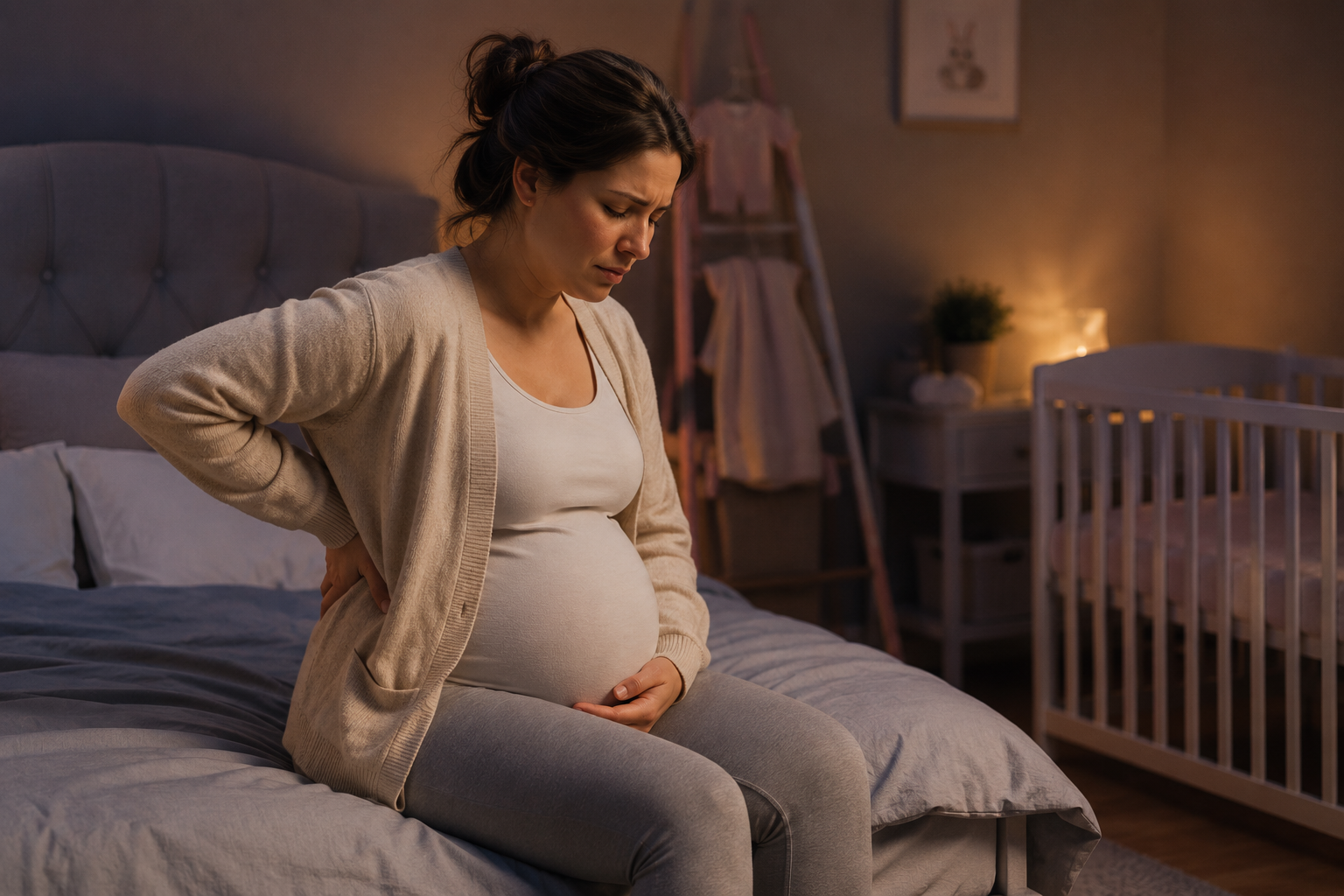
In short: Lower back and back pain occurs in 50-70% of pregnant women and is most often associated with a change in the center of gravity, stress on the spine and relaxation of the ligaments under the influence of hormones. Special exercises, bandage, warmth and posture correction help. Sharp, shooting or increasing pain requires medical advice.
Why does the back hurt during pregnancy?
Back pain is one of the most common complaints during pregnancy. It appears in 50-70% of women, more often in the third trimester, but can begin as early as the first. There are several reasons, and they act simultaneously.
Displacement of the center of gravity. As the abdomen grows, the center of gravity shifts forward. To maintain balance, a woman involuntarily leans back, increasing lumbar lordosis. The back muscles work with increased load, which causes pain.
The hormone relaxin. During pregnancy, the hormone relaxin is produced, which relaxes the ligaments of the pelvis, preparing it for childbirth. But the same effect applies to all joints and ligaments – they become more mobile and less stable. This is especially noticeable in the sacroiliac joints and symphysis.
Expansion of the uterus. The growing uterus presses on the abdominal muscles, stretches them, which further reduces the support of the spine. At the same time, diastasis of the rectus abdominis muscles may increase.
Weight gain. An additional 10-15 kg creates an increased load on the spine, intervertebral discs and joints.
Types of back pain during pregnancy
Lumbar pain (lumbalgia). The most common type. It is localized in the lower back in the center or on both sides. It is aggravated by prolonged standing, sitting, lifting weights. It decreases in the position of lying on the side.
Pain in the pelvic area (pelvic girdle). It is felt deeper, in the area of the sacroiliac joints or symphysis. It often radiates to the buttocks, perineum, down the legs. It intensifies when walking, changing posture, climbing stairs. It is called "pelvic instability syndrome".
Sciatica (ischial neuralgia). Pain that starts in the lower back and spreads along the back of the thigh and leg. It is caused by compression or irritation of the sciatic nerve by an enlarged uterus or displaced pelvic structures.
How to relieve back pain during pregnancy
Special exercises. Regular gentle exercises to strengthen the back and core muscles (internal abdominal muscles) are the most effective non-pharmacological method. Cat-cow exercises, pelvic bends, piriformis stretches, walking – all this helps. For more information about safe activity, see the article Sport and physical activity during pregnancy.
Swimming. Water relieves the load on the spine and joints - this is especially noticeable with pain in the pelvic area. Many women report significant relief after exercising in the pool.
Bandage for pregnant women. A special support belt (bandage) relieves part of the load from the lower back and abdominal muscles, supporting the growing abdomen. It is especially useful for active walking and prolonged standing. It is worn under clothes.
Warmth. A warm (not hot) compress on the lower back for 15-20 minutes relieves muscle spasm. Avoid extremely hot heating pads and prolonged exposure to heat. Baths should be warm, but not hot.
Posture correction. Try to keep your back straight, do not slouch. When sitting, use lumbar support (pillow under the back). Do not cross your legs. When getting out of bed, first roll over on your side, then lower your legs.
Shoes. Wear shoes with a low (2-3 cm) heel or without a heel with good cushioning. A flat sole without arch support, like a high heel, increases the load on the lower back.
How to sleep. Sleep on your side with a pillow between your knees - this reduces the load on the sacroiliac joints. Read more about sleeping positions during pregnancy.
Medications for back pain: what is safe
Most anti-inflammatory drugs (ibuprofen, diclofenac) are contraindicated during pregnancy, especially in the third trimester. Paracetamol in the minimum effective doses and in a short course is considered an acceptable analgesic in pregnancy, but recent studies cast doubt on its complete safety. Any medications should be taken only after consulting a doctor.
Physiotherapy (osteopathy, kinesio taping, acupuncture) can be effective for back pain during pregnancy – but only in specialists who have experience working with pregnant women.
Back pain as a sign of threatening conditions
In some cases, back pain is not a symptom of a musculoskeletal problem, but a complication of pregnancy:
Pyelonephritis of pregnancy is pain in the lower back (usually on one side) with fever, chills, painful urination.
The threat of premature birth is regular pulling pain in the lower back in combination with cramping sensations in the lower abdomen up to 37 weeks.
Preeclampsia is pain in the right hypochondrium and back combined with high blood pressure and swelling.
Pyelonephritis of pregnancy is pain in the lower back (usually on one side) with fever, chills, painful urination.
The threat of premature birth is regular pulling pain in the lower back in combination with cramping sensations in the lower abdomen up to 37 weeks.
Preeclampsia is pain in the right hypochondrium and back combined with high blood pressure and swelling.
When to see a doctor
See a doctor urgently if you have back pain:
Sharp, shooting, increases, and does not go away after rest.
It is combined with fever, chills, painful urination.
It is accompanied by cramping abdominal pain (up to 37 weeks).
It appears with numbness or weakness in the legs.
It is associated with trauma.
Sharp, shooting, increases, and does not go away after rest.
It is combined with fever, chills, painful urination.
It is accompanied by cramping abdominal pain (up to 37 weeks).
It appears with numbness or weakness in the legs.
It is associated with trauma.
Frequently Asked Questions
Will back pain go away after childbirth?
In most cases, pregnancy-related back pain is significantly reduced or disappears in the first weeks after childbirth – as the uterus contracts, relaxin levels decrease and the load on the spine normalizes. In some women, pelvic pain can persist for several months - in this case, physiotherapy is indicated.
Is it possible to visit a chiropractor during pregnancy?
Osteopathy and certain techniques of soft manual therapy are permissible during pregnancy with specialists with appropriate experience. Intensive manipulations on the spine in the lower back and pelvis in the third trimester are not recommended. Be sure to inform the therapist about the pregnancy and its term.
Conclusion
Back pain during pregnancy is a very common problem, but not a reason to put up with discomfort. Regular special exercises, swimming, a brace, correct posture and a pillow between the knees at night help most women. In case of severe or atypical pain, be sure to consult a doctor to rule out serious causes.
Bibliography
- Vermani E, Mittal R, Weeks A. Pelvic girdle pain and low back pain in pregnancy: a review. Pain Pract. 2010;10(1):60-71. https://pubmed.ncbi.nlm.nih.gov/19863747/
- Liddle SD, Pennick V. Interventions for preventing and treating low-back and pelvic pain during pregnancy. Cochrane Database Syst Rev. 2015. https://pubmed.ncbi.nlm.nih.gov/26329399/
- ACOG. Low Back Pain During Pregnancy. FAQ, 2019. https://www.acog.org/womens-health/faqs/back-pain-during-pregnancy
- NICE. Antenatal care. NICE Guideline NG201, 2021. https://www.nice.org.uk/guidance/ng201
- Ministry of Health of the Russian Federation. Clinical recommendations: Normal pregnancy. Ministry of Health of the Russian Federation, 2023. https://cr.minzdrav.gov.ru/
This material is for informational purposes only and does not constitute medical advice and is not a substitute for medical advice. If a child's sleep is accompanied by alarming symptoms, a pronounced deterioration in health, problems with breathing, feeding or weight gain, it is necessary to consult a qualified medical specialist as soon as possible, and not rely only on information from the Internet.