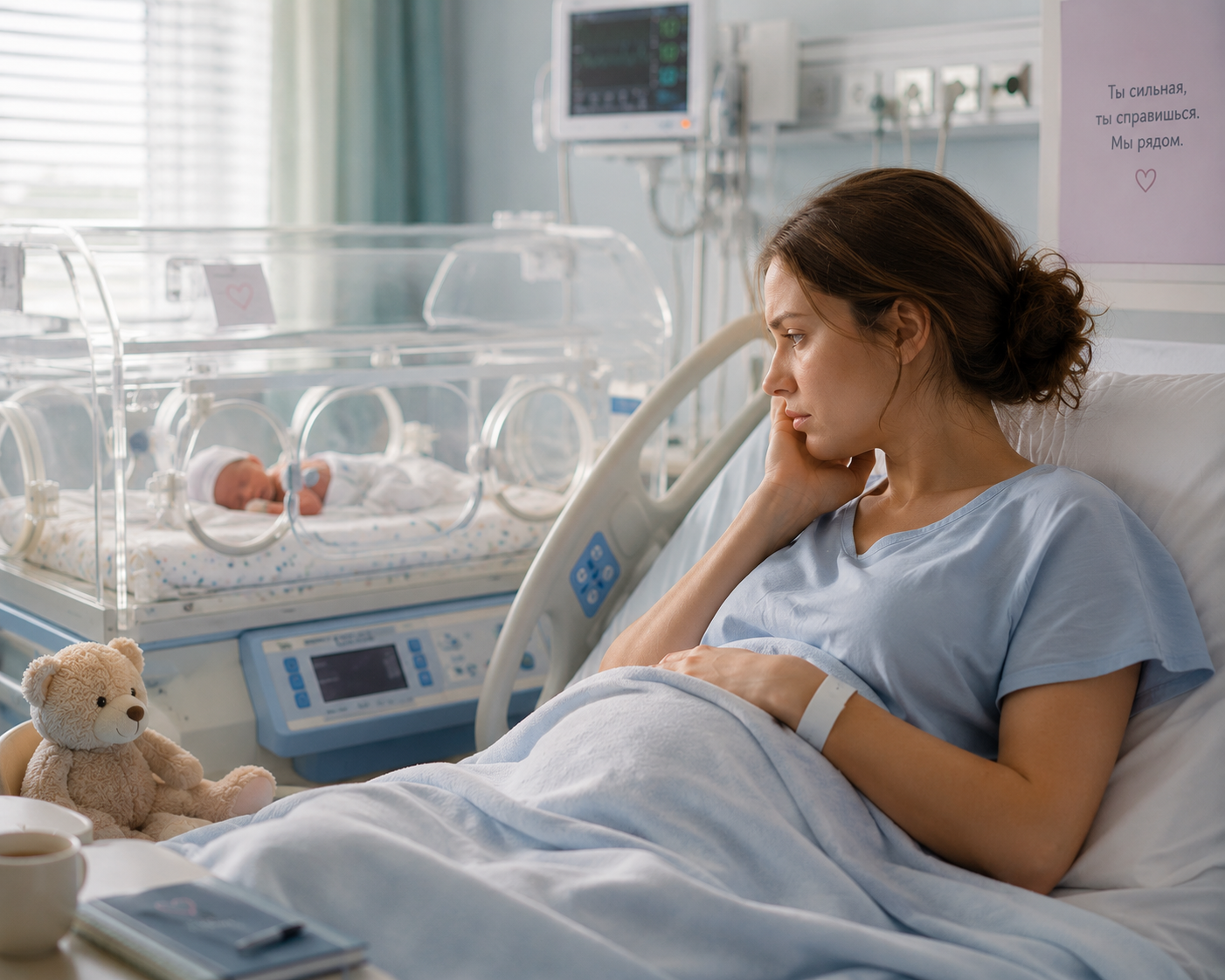
In short: premature birth is considered to be before 37 completed weeks. Every year, about 15 million children are born prematurely in the world. Modern neonatology makes it possible to nurse children born from 22-24 weeks. Early hospitalization and prevention are key to better outcomes.
What is preterm birth
Premature birth is considered to be labor that began before 37 completed weeks of pregnancy (259 days). According to the term, there are:
- Extremely early: up to 28 weeks (very premature).
- Very early: 28-32 weeks.
- Early: 32-34 weeks.
- Late: 34-37 weeks (most cases).
According to the WHO, premature birth is the leading cause of death in children under 5 years of age. But advances in neonatology have dramatically changed the situation over the past 30 years.
Causes and risk factors
Causes of premature birth:
- Infections: Ascending infections of the genital tract are the most common cause of early preterm birth.
- Cervix: isthmic-cervical insufficiency (ICN) – shortening and dilation of the cervix without contractions.
- Chronic diseases of the mother: diabetes mellitus, hypertension, kidney disease.
- Multiple pregnancies: Twins or triplets are born prematurely in 50% to 60% of cases.
- Previous preterm birth: 15-30% risk of recurrence.
- Fetal or placental abnormalities.
Signs of threatened preterm birth
Go to the hospital immediately if you feel:
- regular contractions (more than 4 per hour);
- pressure in the lower abdomen or a feeling that the child has "dropped";
- lower back pain that does not go away;
- changes in vaginal discharge (watery, mucous with blood);
- suspicion of water leakage.
What do doctors do when there is a threat of premature birth
Tocolysis (cessation of contractions): nifedipine or atosiban temporarily inhibit the contractile activity of the uterus - time is gained for fetal preparation.
Corticosteroids (betamethasone, dexamethasone): are administered to the mother to accelerate the maturation of the fetal lungs. The effect is maximum after 24-48 hours. WHO recommends them if there is a threat of childbirth before 34 weeks.
Magnesium sulfate: if there is a threat of childbirth before 32 weeks, it is administered for neuroprotection - to reduce the risk of cerebral palsy in a premature baby.
Antibiotics: In case of premature rupture of membranes (PROM), antibiotics prolong pregnancy and reduce the risk of infection.
Nursing a premature baby
The prognosis depends primarily on the date of birth:
- 34–37 weeks: Most "late" preterm babies survive without long-term problems. Help with breathing and feeding may be required.
- 28–34 weeks: survival is high (more than 90%) in equipped centers, the risk of complications is moderate.
- Up to 28 weeks: survival increases, but the risk of long-term impairment (vision, hearing, development) is significant.
Kangaroo mother care for premature infants
Kangaroo mother care—skin-to-skin contact between a premature baby and mom (or dad) for a few hours a day—has been shown to improve prognosis. WHO recommends it as a standard for nursing premature infants.
Breast milk for a premature baby is a medicine: it reduces the risk of necrotizing enterocolitis (a severe intestinal complication). Even if the baby cannot suck, start pumping from the first hours.
Prevention of preterm birth
If there are risk factors, the doctor may prescribe:
- Progesterone (vaginal suppositories or gel) – for shortening of the cervix or previous premature birth.
- Cervical cerclage (suturing of the cervix) – in ICN.
- A pessary is a ring on the cervix that keeps it closed.
When to see a doctor
Call an ambulance or maternity hospital immediately if before 37 weeks:
- regular contractions began;
- water breaks or watery discharge;
- bleeding appeared;
- the movements of the fetus decreased sharply.
Frequently Asked Questions
If the birth is stopped, is it harmful to the child?
Temporary cessation of contractions (for 48-72 hours) is needed to administer corticosteroids and transfer the mother to the perinatal center. After that, tocolysis is usually stopped. Prolonged tocolysis does not improve the prognosis.
Is it my fault that the birth began prematurely?
No. In most cases, premature birth is not due to the actions of the mother. Don't beat yourself up: it won't help, it will only increase stress.
How to psychologically cope with premature birth?
It's very hard. Contact a psychologist at the perinatal center - such help is available free of charge. Postpartum depression in mothers of prematurity is much more common - do not ignore your feelings.
Conclusion
Preterm birth is a serious but increasingly solvable medical situation. Modern perinatal centers save the lives of children born at a very early stage. Know the signs of a threat and do not hesitate to seek help.
Bibliography
- WHO. Born too soon: Decade of action on preterm birth. 2023. https://www.who.int/publications/i/item/9789240073890
- ACOG Practice Bulletin No. 171. Management of Preterm Labor. Obstet Gynecol. 2016.
- NICE guideline NG25. Preterm labour and birth. 2015 (updated 2022). https://www.who.int/news-room/fact-sheets/detail/preterm-birth
- Goldenberg RL et al. Epidemiology and causes of preterm birth. Lancet. 2008. https://pubmed.ncbi.nlm.nih.gov/18177778/
- Ministry of Health of the Russian Federation. Clinical guidelines: Preterm birth. 2022. https://cr.minzdrav.gov.ru/
- Vogel JP et al. Antenatal corticosteroids for reducing adverse maternal and child outcomes in special populations of women at risk of imminent preterm birth. Cochrane Database. 2017.
This material is for informational purposes only and does not constitute medical advice and is not a substitute for medical advice. If a child's sleep is accompanied by alarming symptoms, a pronounced deterioration in health, problems with breathing, feeding or weight gain, it is necessary to consult a qualified medical specialist as soon as possible, and not rely only on information from the Internet.